How to recycle batteries safely: which ones can never go in the bin
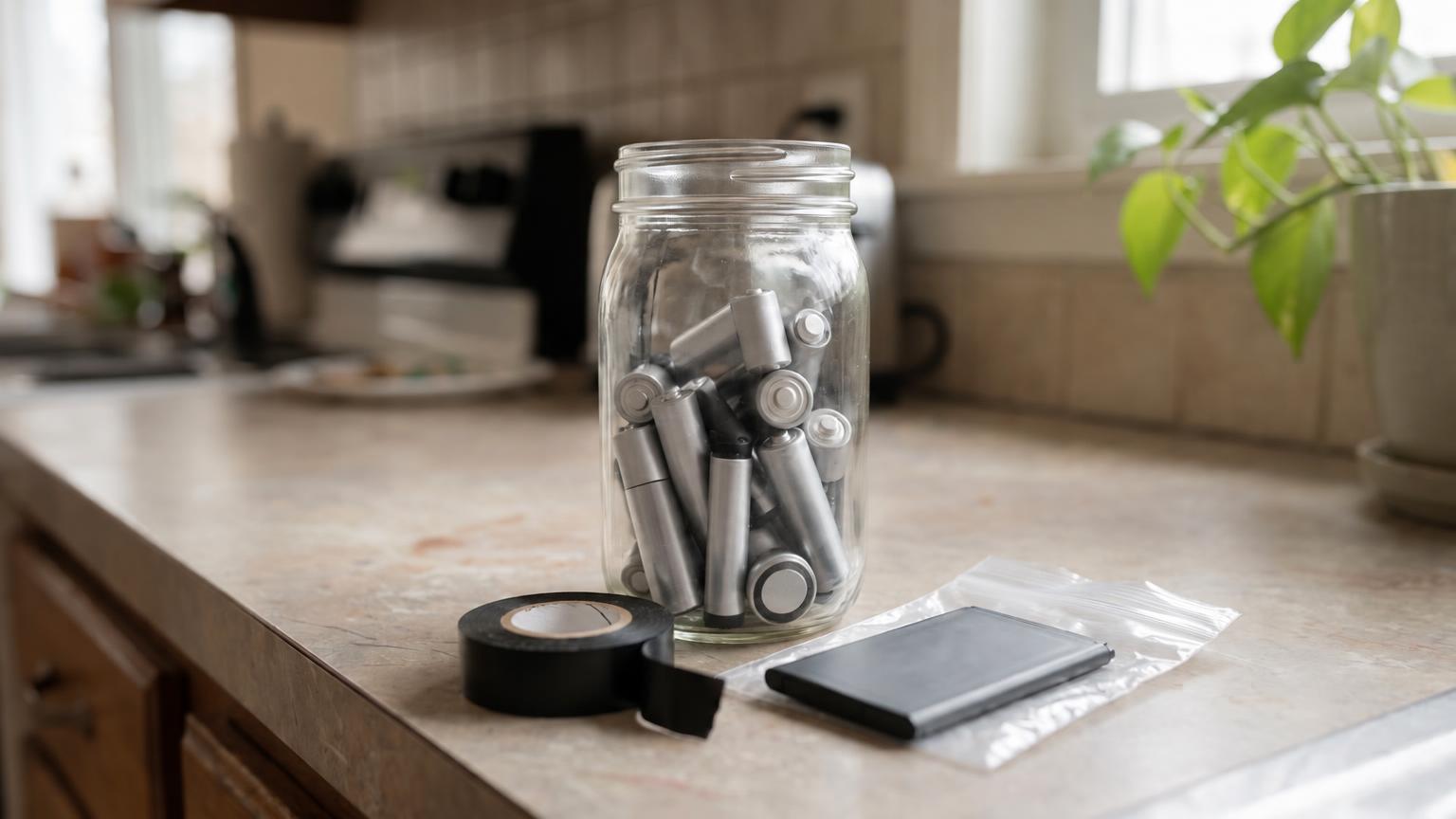
Most used batteries should go to a battery recycling drop-off, not the bin. Anything lithium or rechargeable, including coin cells and anything with a battery built in, must never go in household trash or the recycling cart: crushed or with its ends touching metal, it can start a fire. Tape the ends or bag each one, keep them together in a jar, and take the jar in a few times a year. Ordinary alkaline batteries (AA, AAA, C, D and 9-volt) are the one type many places let you bin, but a recycler is still the better home for them.
Why batteries cause trouble in the bin
A battery can hold enough energy to start a fire even when it no longer powers your remote. In a garbage truck or recycling plant, batteries get crushed, punctured and pressed against metal, and that is when they spark. The US Environmental Protection Agency (EPA) warns that lithium-ion batteries thrown out with household garbage or recycling can start fires and put workers at risk, and that fires at the end of a battery's life are common.
Batteries also hold metals worth getting back. Depending on the type they can contain nickel, cadmium, mercury, lead or silver, and the lithium-ion kind uses lithium, cobalt, nickel and graphite. Recyclers recover these to make new batteries, which is the whole point of the trip to the drop-off.
Sort your batteries into three groups
You do not need to know battery chemistry. Read the label (the type is printed on the battery; its colour or shape tells you nothing) and put each one in one of three groups.
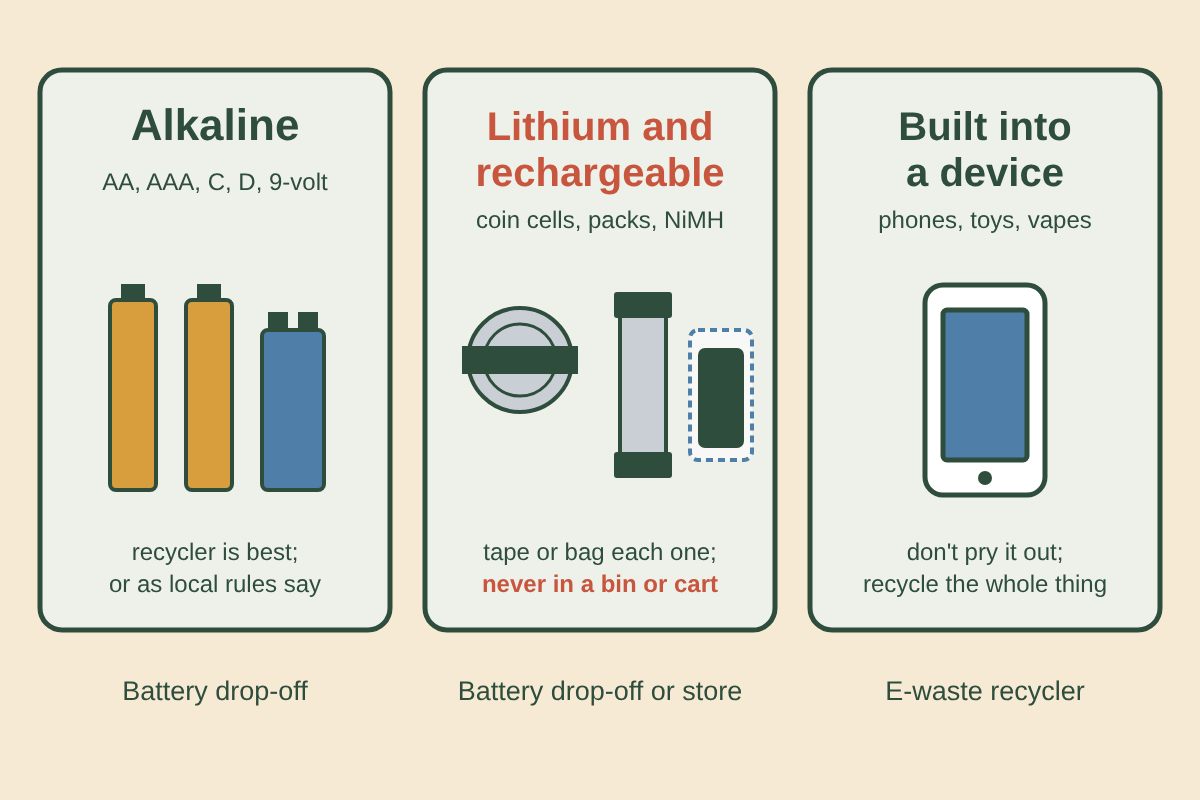
Alkaline and zinc-carbon: AA, AAA, C, D, 9-volt
These are the everyday single-use batteries in clocks, torches, remotes and toys. The EPA says that in most US communities they can safely go in household trash, but it recommends sending them to a battery recycler. Local rules differ, and some places ask you to recycle every battery, so check your city or county's waste page before you bin one.
If you do keep 9-volt batteries for recycling, put a piece of tape over the top. Both terminals sit side by side there, so a 9-volt can easily touch a key, a coin or another battery.
Lithium and rechargeable: never in either bin
This group includes:
- lithium single-use batteries, used in cameras, smoke alarms and some remotes, which can look just like alkaline AAs (check for the word "lithium" on the side)
- button and coin cells from watches, car key fobs, scales and hearing aids
- rechargeables: nickel-metal hydride (NiMH) AAs, nickel-cadmium (Ni-Cd) tool batteries, and lithium-ion packs from cameras, power tools and laptops
None of these go in household trash or the recycling cart. Before you store them, put non-conductive tape (plain electrical tape is ideal) over the terminals, or put each battery in its own small plastic bag. For a coin cell, tape over the whole button. Coin cells are also a swallowing hazard for young children, so keep the collection jar on a high shelf.
If a battery is swollen, leaking, dented or hot, do not tape it up and tuck it in the jar with the rest. Keep it apart, and contact the manufacturer or your local household hazardous waste service for how to handle it.
Batteries built into a device
Phones, tablets, earbuds, electric toothbrushes, vapes and many toys have a battery you cannot easily remove. Do not pry it out: a bent or punctured lithium-ion battery is exactly the kind that catches fire. Take the whole device to an electronics recycler, a retailer with an electronics take-back scheme, or your local electronics collection. The same drop-offs often take old string lights and other small electrical items.
Set up a battery jar at home
The easiest habit is one container where used batteries go the moment they come out of a device.
- Pick a jar or plastic tub with a lid. Glass or plastic is better than a metal tin, because metal can connect the terminals.
- Keep a roll of electrical tape next to it, so taping takes a few seconds.
- Tape or bag every lithium, coin and rechargeable battery as it goes in. Taping the alkaline ones too does no harm.
- Keep the jar somewhere cool and dry, away from anything flammable and out of children's reach.
- Take it to a drop-off when it is full, or a few times a year, whichever comes first.
Where to take them
In the US, the EPA points people to two search tools, Earth911 and Call2Recycle, which list battery drop-offs near you. Some retailers run battery take-back boxes, and local household hazardous waste collections take all kinds. Outside the US, your local council or waste service will say where its battery collection points are.
Waste fewer batteries in the first place
The fewest batteries to recycle are the ones you never buy. For things that eat through batteries quickly, such as game controllers, toys and wireless keyboards, a set of rechargeable NiMH AAs and a charger replaces a steady stream of single-use ones. Keep single-use alkalines for low-drain things like wall clocks and smoke alarms, where one battery lasts a long time anyway.
Batteries are one of the problem items that spoil a whole load of recycling, so keeping them out is the single most useful step in preparing your recycling so it actually gets recycled.
