Start composting at home: a beginner's guide
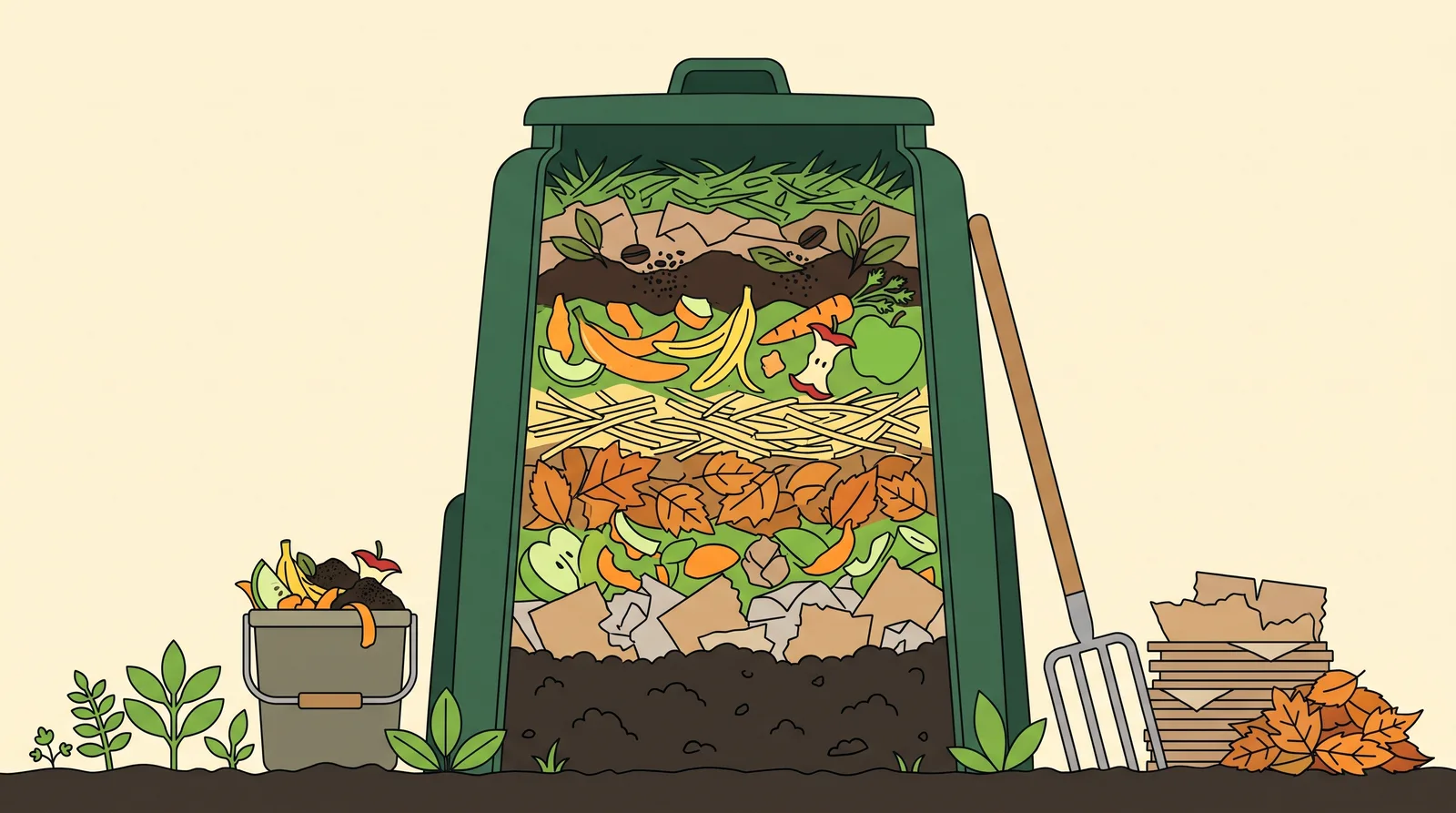
Composting turns food scraps and garden waste into a soil improver instead of rubbish. It takes less effort than most people expect.
Choose a setup that fits your space
- Garden bin or heap: the easiest option if you have outdoor space.
- Small closed bin or tumbler: tidier, and good for smaller gardens.
- No garden: check whether your area collects food waste, or look for a community composting scheme.
Balance "greens" and "browns"
Compost works best with a mix of two kinds of material:
- Greens (moist, nitrogen-rich): fruit and vegetable scraps, coffee grounds, tea leaves, grass cuttings.
- Browns (dry, carbon-rich): cardboard, paper, dry leaves, straw.
Aim for roughly equal amounts. Too many greens makes it wet and smelly; too many browns makes it slow.
What to leave out of a home bin
Meat, fish, dairy, cooked food with oil, pet waste and diseased plants can attract pests or cause smells in a simple home compost bin. Leave them out unless your system is designed for them.
Keep it working
Turn or mix the pile every week or two to let air in, and keep it about as damp as a wrung-out sponge. Depending on the setup and the season, compost can be ready in a few months; it is done when it looks dark and crumbly and smells earthy.
Composting is the last step. The first is wasting less in the kitchen: see five easy ways to waste less food at home.
