How to prepare recycling so it actually gets recycled
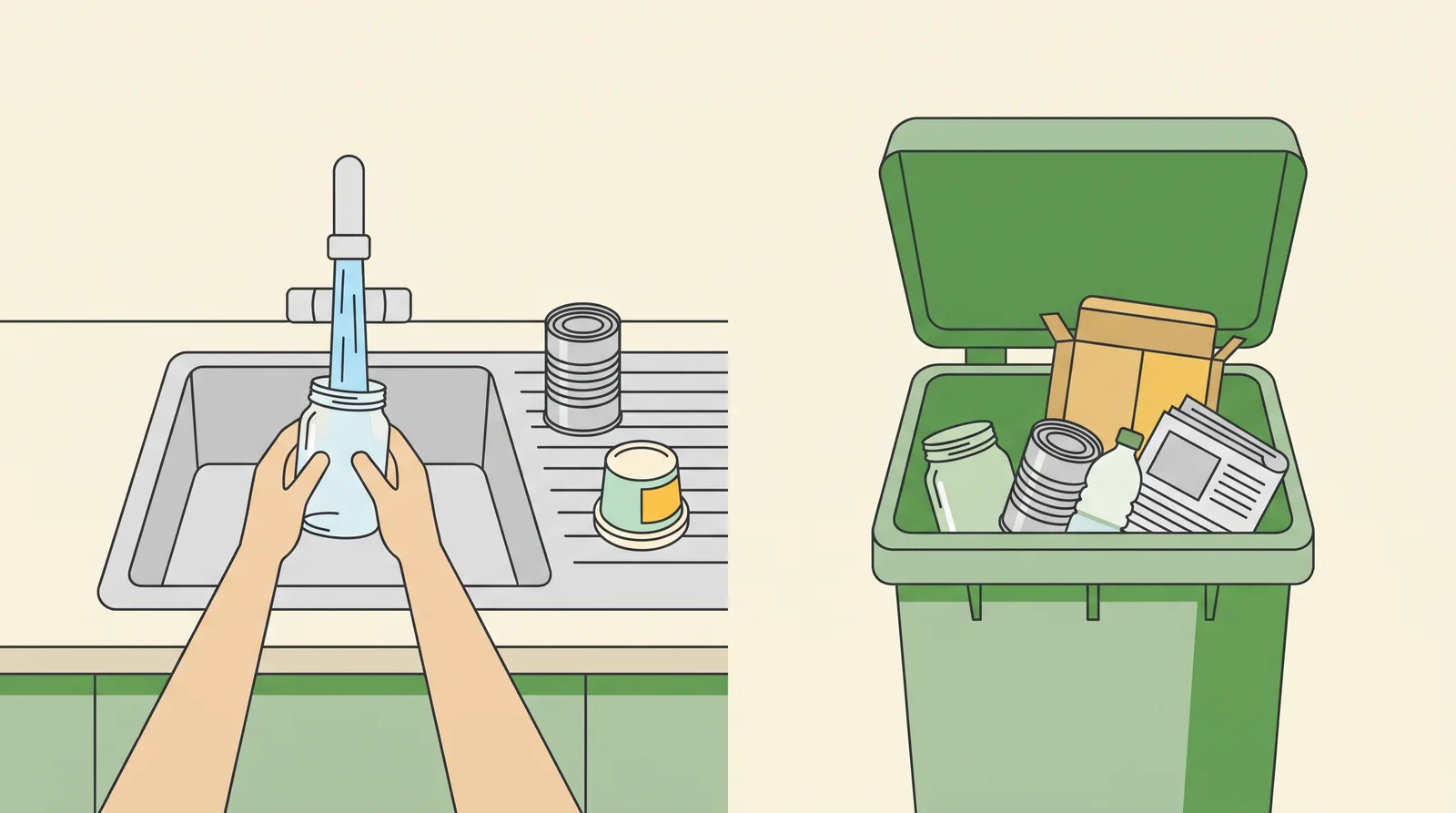
Recycling only works if what you put in the bin can actually be sorted and sold on. A few habits make the biggest difference: check your local rules, empty and quickly rinse containers, keep recyclables loose rather than bagged, and keep problem items such as batteries out. None of it takes much time, and it stops good recycling from going to waste.
Start with your local rules
What can go in a recycling bin depends on where you live, because each council or city sends its recycling to different sorting facilities. Look up your local collection guide, usually on your council's or waste service's website, and keep a screenshot or a printout near the bin. When the guide says something is not accepted, believe it, even if a neighbour's area takes it.
Empty, rinse, dry
Leftover food and liquid can soak paper and cardboard and make whole loads harder to recycle.
- Scrape out food and pour away liquids.
- Give jars, cans, bottles and tubs a quick rinse. They do not need to be spotless; a swirl of water, or using leftover washing-up water, is enough.
- Let them drain so they do not drip onto paper and card.
Keep it loose, not bagged
Unless your local guide says otherwise, put recyclables into the bin loose. Items tied up in a plastic bag are hard to sort, and plastic bags and film can tangle in sorting machines. Many supermarkets collect clean plastic bags and film separately, so check your area's options.
Know the common troublemakers
- Batteries and anything with a battery inside (old phones, vapes, small electrical items) can start fires in collection trucks and sorting plants. Take them to a battery or electrical drop-off point instead.
- Greasy or food-covered paper and card, such as the stained bottom of a pizza box, is often not accepted. Tear off the clean parts to recycle if your area allows it, and compost or bin the greasy part.
- Hoses, cables, string and clothing wrap around machinery. Clothes and textiles are better repaired with a needle and thread if they still fit, or donated or taken to a textile bank.
- Very small items can fall through sorting equipment. Check your guide for loose bottle caps and shredded paper.
When in doubt, leave it out
Putting something in the recycling in the hope that it can be recycled is sometimes called "wish-cycling". It usually just adds work at the sorting plant and can spoil items that would otherwise have been recycled. If you are not sure and cannot check, put it in the general waste.
Recycle less by reusing more
Recycling is the last step, not the first. Refilling, reusing and choosing less packaging in the first place save more. See cut packaging waste with reusable swaps for easy places to start, and start composting at home for food scraps.
