How to stop wasting bread: store it, freeze it, use up the stale ends
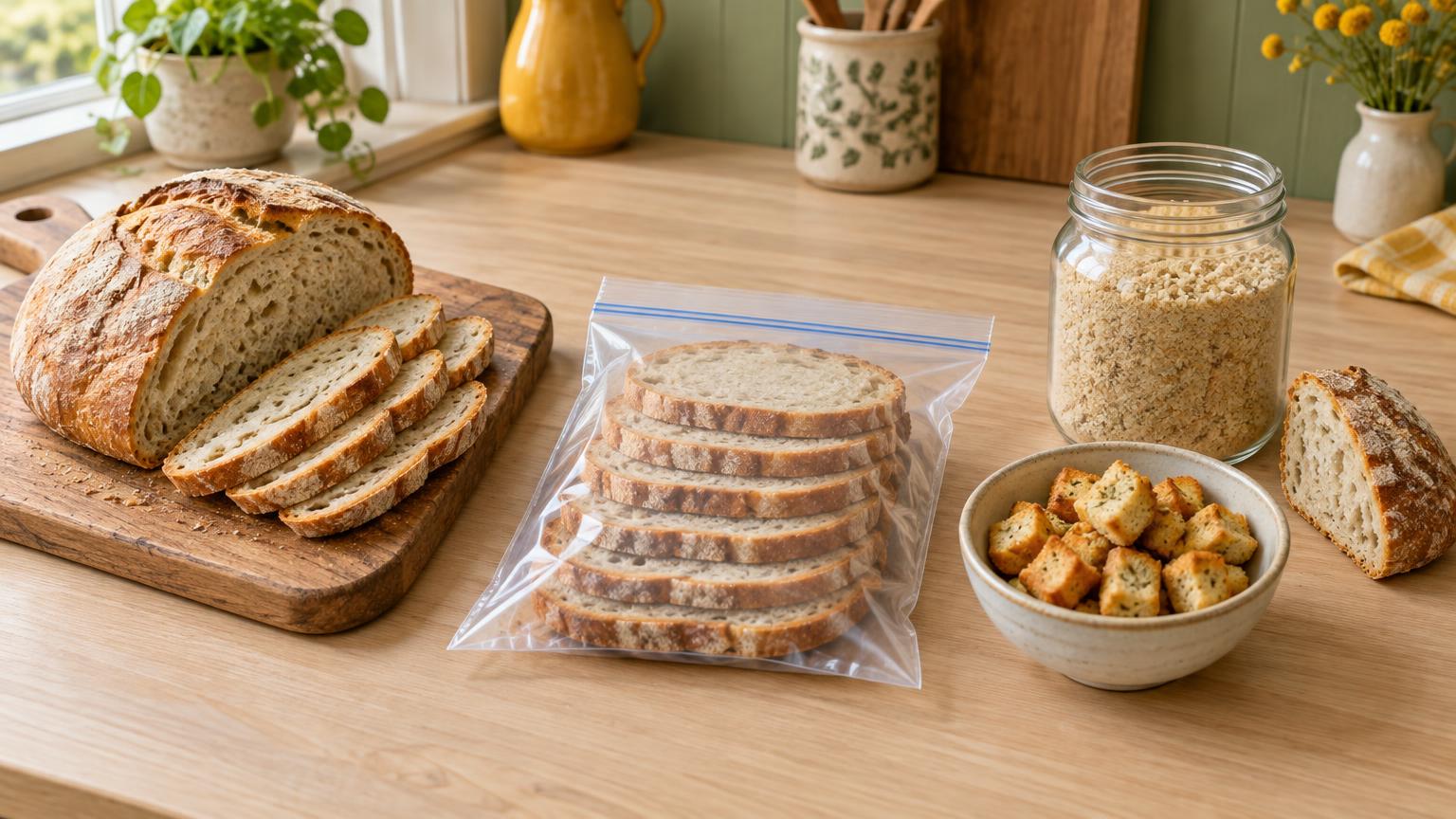
Bread is one of the foods people throw away most often, and most of it goes for one of two reasons: it went stale before anyone finished it, or it went mouldy in a warm kitchen. The fix is simple. Keep only what you will eat in the next two or three days out on the counter, freeze the rest in slices, and turn the stale ends into crumbs, croutons or French toast instead of binning them. The fridge, which feels like the safe choice, is the worst place for it.
Where to keep bread: counter, freezer, not the fridge
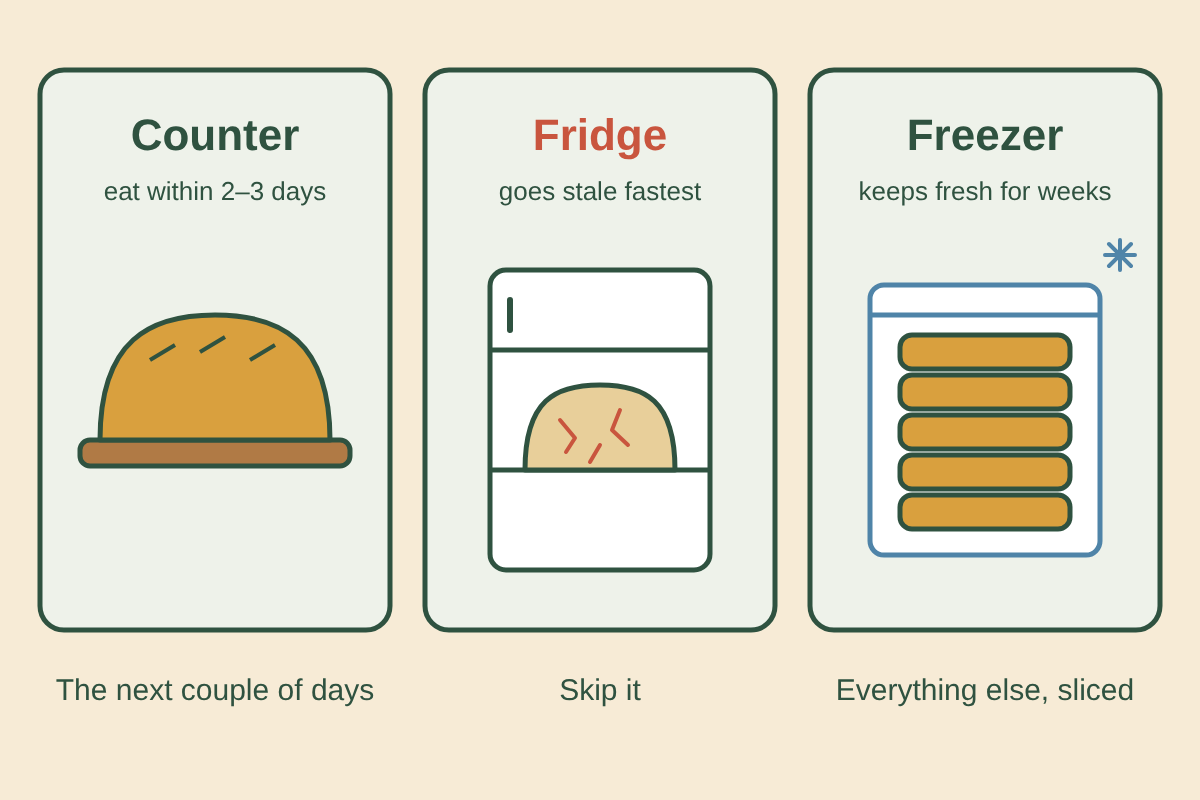
Bread goes stale because the starch in it slowly recrystallises and pushes water out, which is why an old slice feels hard and dry even when it has been sealed in a bag. That process runs fastest at fridge temperatures. A loaf in the fridge goes stale in a day or two, sooner than the same loaf left on the counter.
So split every loaf the day you buy or bake it. What you will eat in the next couple of days stays on the counter, in a bread bin, a cloth bag or its paper bag, cut side down on a board. A sealed plastic bag keeps it soft for longer but traps moisture, so in a warm room it can turn mouldy sooner. Everything else goes in the freezer, which pauses staling almost completely: bread comes out tasting close to how it went in.
The one time the fridge makes sense is in a very hot, humid spell when a loaf would grow mould before you could eat it. Even then, freezing is better.
How to freeze bread so you use it
Slice it first. A whole frozen loaf has to thaw all at once, which defeats the point; frozen slices come out one or two at a time and go straight into the toaster.
- Slice the loaf, or buy it sliced.
- Put the slices in a freezer bag and press out as much air as you can before sealing. Air in the bag is what causes freezer burn, the same problem as with frozen leftovers.
- Write the date on the bag. Bread keeps safely in the freezer for a long time, but it tastes best within a couple of months.
- Toast slices straight from frozen, or leave them on a plate for about 20 minutes at room temperature for sandwiches.
Rolls, bagels, pitta and wraps freeze the same way. Split bagels and rolls before freezing so they toast evenly. If you bake your own bread, let it cool completely first, or the steam turns to ice inside the bag.
Stale or mouldy: one you can use, one you can't
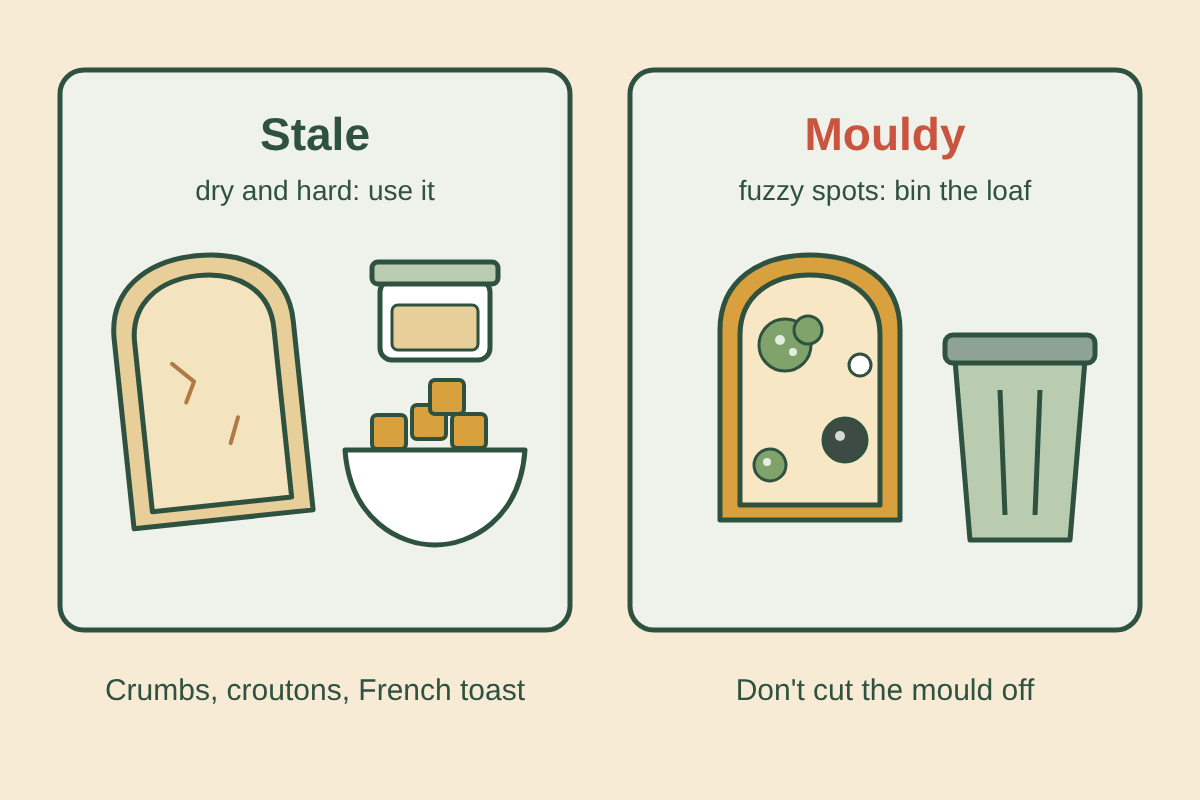
Stale bread is dry, firm and maybe a little crumbly. It is perfectly safe, and for some dishes it is better than fresh because it soaks up liquid without falling apart.
Mouldy bread is a different matter. If you see fuzzy spots of green, blue, white or black, throw the whole loaf away, not just the slice with the spot. Mould on soft, porous food like bread spreads threads below the surface where you can't see them, and the US Department of Agriculture advises discarding bread and baked goods that have gone mouldy rather than cutting the mould off. Don't sniff it to check, either; breathing in spores is not a good idea.
Seven ways to use up stale bread
Most of these take the dry heel or the last few slices and turn them into something you would happily buy.
- Breadcrumbs. Blitz stale bread in a food processor or grate it, then freeze the crumbs in a bag. They don't clump, so you can scoop out what you need for coating, stuffing or topping a pasta bake.
- Croutons. Cut into cubes, toss with a little oil, salt and any dried herbs, and bake at around 180°C (350°F) until golden and crisp, turning once. They keep for days in a sealed jar.
- French toast. Slightly stale bread is ideal because it soaks up the egg and milk without going soggy.
- Bread pudding. Layer torn bread with dried fruit, pour over a sweet custard and bake. A good home for leftover panettone after Christmas, too.
- Savoury bake. The same idea with eggs, milk, cheese and whatever vegetables need using, left to soak for an hour before baking.
- Bread salad. Toss torn, toasted chunks with ripe tomatoes, cucumber, onion, olive oil and vinegar, and let it sit for ten minutes so the bread drinks up the juices.
- Thickening soup. A handful of stale bread stirred into a vegetable or bean soup makes it thick and filling.
To bring a whole stale loaf back for one more meal, run it briefly under the tap so the crust is damp, then put it in a hot oven, around 200°C (400°F), for five to ten minutes. It comes out with a crisp crust and a soft middle. Eat it that day, because it goes stale again quickly afterwards.
Buy and bake to match what you eat
If you keep freezing half a loaf, buy smaller loaves or freeze the half the day you buy it. Ending up with too many crusts and heels? Keep a bag in the freezer and add them as you go; when it is full, make a big batch of breadcrumbs.
A quick look in the bread bin and the freezer before you shop does the same job as the ten-minute pantry check: it stops you buying a fresh loaf when there are six slices waiting. For more small habits like this, see five easy ways to waste less food at home.
