What to do with old string lights: fix, reuse or recycle them
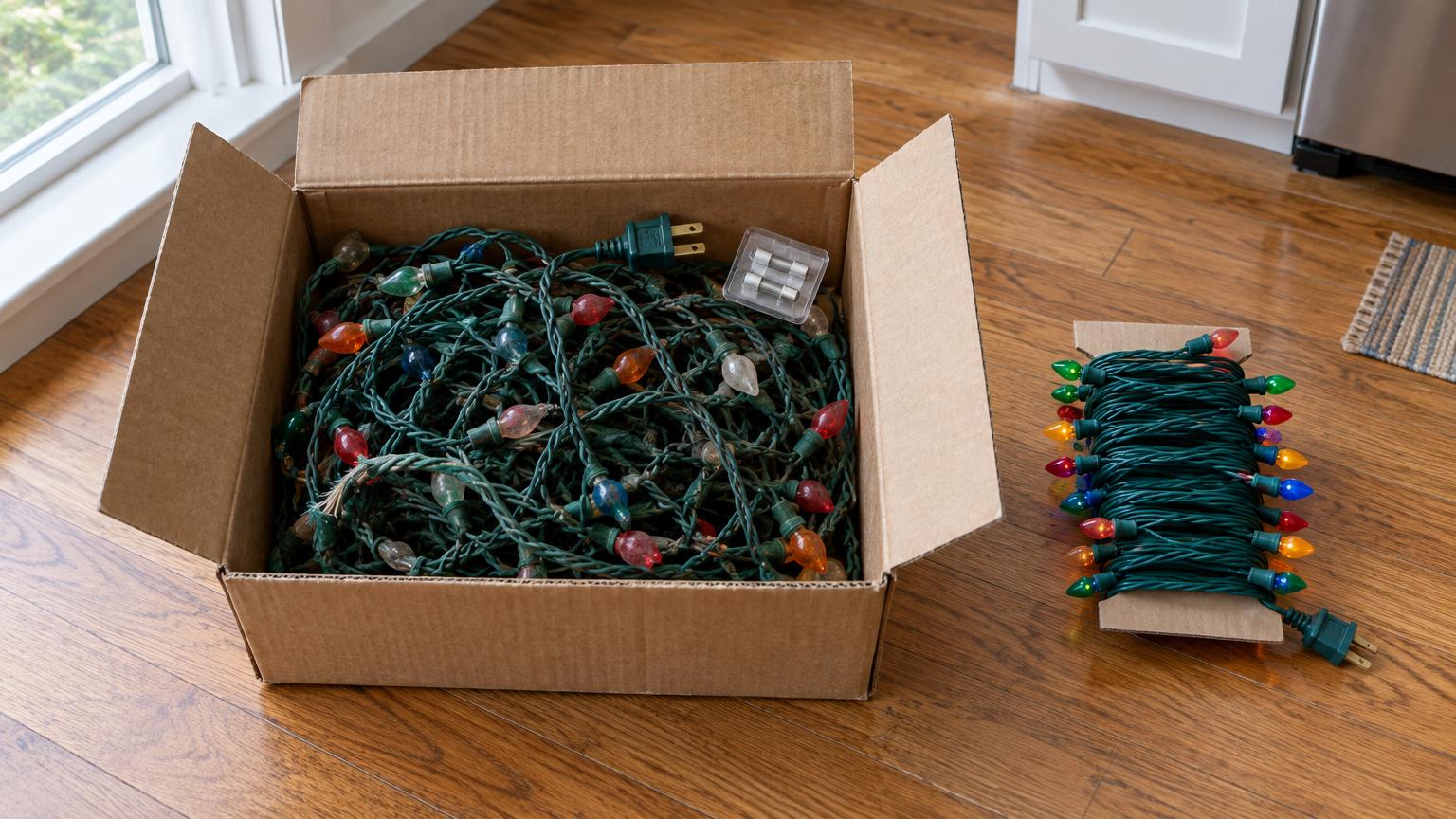
Do not put old string lights in your curbside recycling bin. They wrap around the sorting machines and can shut down the line. Try a new fuse or bulb first, since a dead strand often has a simple fault. Pass working lights on to someone else. For strands that are truly finished, use a seasonal drop-off at a store or a town collection, or a mail-in recycling program, which can recover the copper wire, glass and plastic.
First, see if it can be fixed
A strand that has gone partly or fully dark is often a quick repair. Unplug it before you touch anything.
- Check the fuses. Most plug-in strands have a small sliding door on the plug with two tiny fuses inside. If one looks burned or the wire inside is broken, swap it. Many sets come with spare fuses in a small bag.
- Look for a loose or broken bulb. On many older incandescent strands, one bad bulb can darken a whole section. Push each bulb firmly into its socket, and replace any that are blackened or broken with one of the same type.
- Try a light tester. A cheap tester from a hardware store can find the problem bulb and save you checking each one.
- Check the wires. If you see cracked coating, bare wire, or melted or crushed sections, stop there. Do not tape it up and do not use it. Send it for recycling.
If it is battery powered, try fresh batteries and clean any corrosion from the contacts.
Reuse the ones that still work
If a strand still works but you no longer want it, someone else probably does.
- Pass it on. Schools, theaters, community centers and neighbors will often take working lights. Local buy-nothing groups are a good place to offer them.
- Donate to a thrift store. Call first, as not all of them take electrical items.
- Use them in a new way. A working strand can light a porch, a bookcase or a kid's room all year, as long as it is rated for where you use it.
- Save parts. Keep a dead strand's unbroken spare bulbs for other sets of the same type, along with any spare fuses. Throw nothing away until you have checked for those.
To avoid tangles next year, wind each strand around a piece of card and label it. It sounds fussy, but tangled and damaged lights are a big reason people throw out strands that still work.
Where to recycle dead lights
String lights have copper wire, glass and plastic in them, and the materials can be recovered. They just need the right kind of recycler. Earth911 recommends these routes:
- Your local waste service or recycling center. Many towns set up special drop-offs for lights around the holidays, or take them with electronics. Search your city or county's website, or use Earth911's search by ZIP code.
- Big retail stores. Home Depot and Lowe's have run seasonal light collection at some locations. Availability changes every year and from store to store, so call before you go.
- Mail-in programs. Holiday LEDs runs a free program for string lights, and has offered a discount on new LEDs in return. It accepts strands only, not rope lights or loose bulbs, and you pay for the postage. Christmas Light Source also takes old lights by mail. Check the current terms on each company's site before you send anything.
- Scrap metal yards. Some take wire for the copper. Call ahead and ask, as not all of them accept small amounts or wire with plastic bulbs still attached.
Before you send them off, take off any garland, tinsel or hooks so that you are sending only the lights. If there is a battery pack, take the batteries out and handle them separately. Batteries can start fires in collection trucks and sorting plants, so they go to a battery drop-off.
Older strands may have lead in the wire coating, so wash your hands after you have handled them.
Why they cause so much trouble in the bin
Sorting plants use spinning screens and belts to separate materials. Anything long and stringy, like cables, hoses or lights, wraps around the machinery, and workers have to stop the line to cut it free. Recyclers call these "tanglers". They are a hazard for workers, and they can cost a plant a lot of downtime. So even though the materials can be recycled, the blue bin is the wrong place for them.
The trash is the last resort, but it is still better than the recycling bin if you have no other choice. It just means the copper is lost.
When you do replace them
If you are buying new lights, a few choices can reduce waste down the road:
- LED strands use far less electricity than incandescent ones, and their bulbs tend to last longer. They also stay cool and are less fragile.
- Replaceable bulbs and fuses let you keep a set going. Avoid sets with bulbs molded into the wire if you plan to repair them.
- A timer means they run only when you are enjoying them.
- Buy only what you need. Measure your tree, window or railing first. Unopened boxes usually go back to the store, and open ones go into a drawer for years.
The rest of the Christmas clearout can go the same way. Our guide to which wrapping paper can be recycled covers the paper, and real or artificial trees covers what to do with the tree.
