How to store fruit and vegetables so they last longer
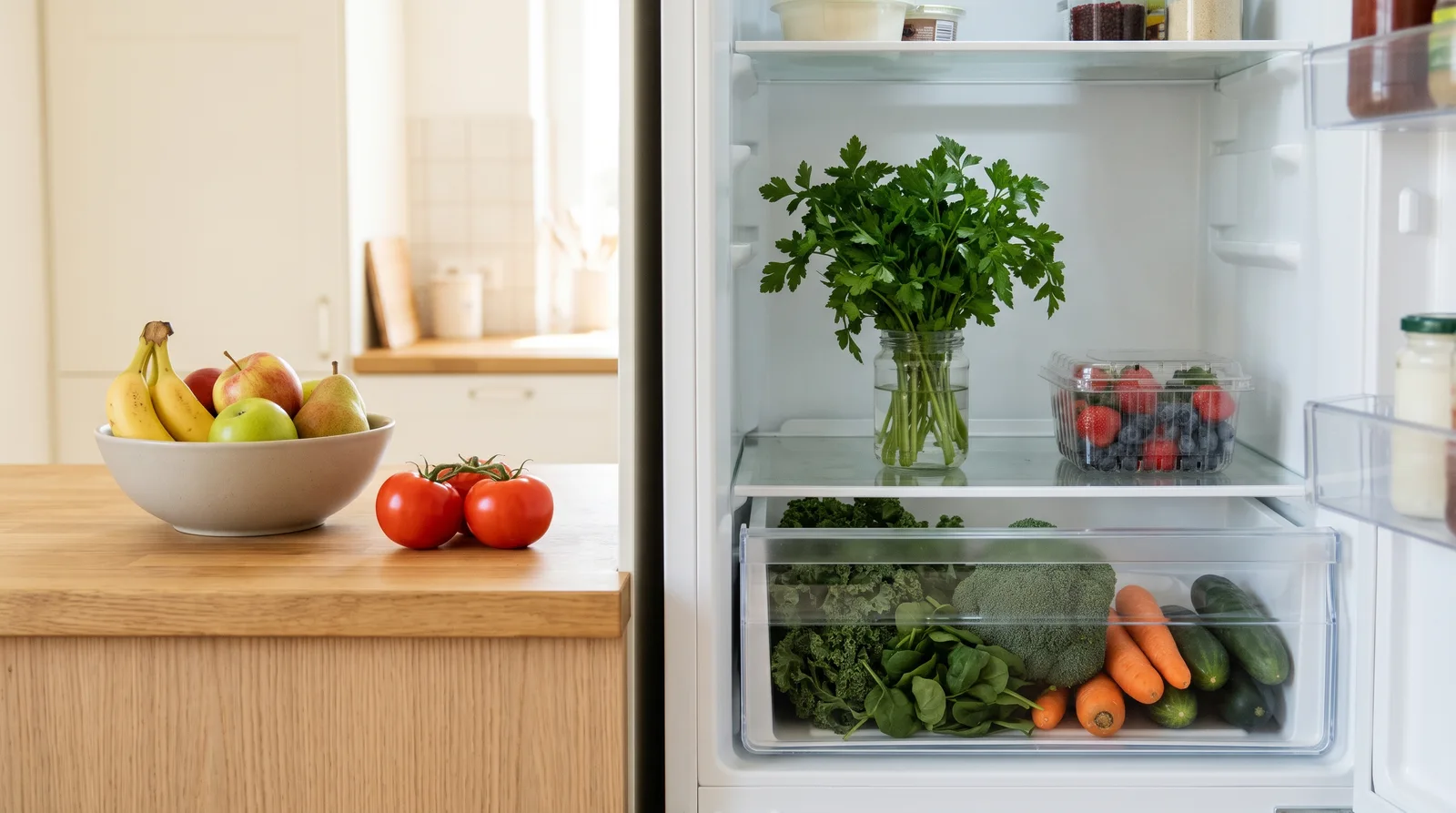
Most fresh produce that ends up in the bin was bought with good intentions and then stored in the wrong place. The fix is simple: keep fruits that give off ripening gas away from vegetables that wilt from it, give leafy things the right amount of moisture, and keep a few items out of the fridge altogether. Do that and you will waste far less of what you buy.
Separate the ripeners from the rest
Some fruits release ethylene, a natural gas that speeds up ripening. Apples, bananas, avocados, pears, tomatoes and stone fruit such as peaches and plums are the main ones. Vegetables like lettuce and other leafy greens, broccoli, cucumbers and carrots are sensitive to it and turn yellow, soft or bitter sooner when they sit next to them.
So the first habit is just distance: keep the fruit bowl and the vegetable drawer apart, and do not store a bag of apples on top of your salad. You can also use the effect on purpose. A hard avocado or pear ripens faster in a paper bag with a banana.
Use the crisper drawers properly
Many fridges have two drawers, often with a small slider. If yours does:
- More humid (vent closed): vegetables that wilt as they lose water, such as leafy greens, herbs, broccoli, carrots and cucumbers.
- Less humid (vent open): fruits that rot more than they wilt, such as apples, pears and grapes.
If your fridge has only one drawer, use it for vegetables and keep fruit on a shelf.
Keep leafy greens and herbs from wilting
- Lettuce and salad leaves: wash and dry them well, or leave them unwashed, then store them in a container or bag lined with a clean, dry tea towel or kitchen paper. It soaks up the extra moisture that makes leaves go slimy.
- Soft herbs such as parsley and coriander: trim the stems and stand them in a jar with a little water in the fridge, like a bunch of flowers. Basil is the exception and usually keeps better the same way on the counter, since it dislikes the cold.
- Celery and carrots: if they go limp, stand them in a little cold water in the fridge for a while and they often firm up again.
Know what stays out of the fridge
- Bananas and whole tomatoes keep their flavour and texture better at room temperature. Once a tomato is cut, put it in the fridge.
- Potatoes, onions and garlic like somewhere cool, dark and dry, such as a cupboard. Keep potatoes in the dark so they do not turn green, and store them away from onions, which can make them sprout sooner.
- Avocados and stone fruit ripen on the counter. Once they are ripe, the fridge slows them down for a few more days.
Wash berries just before eating
Berries and grapes spoil faster when they are stored wet. Keep them unwashed in the fridge, in a container that lets some air in, and rinse only what you are about to eat. Pick out any mouldy berry straight away so it does not spread.
Make a "use first" spot
Put anything that is starting to soften in one visible place, such as the front of the fridge shelf or a small bowl on the counter. When you cook, start there. Soft vegetables go into soups, stir-fries and sauces; overripe bananas and fruit into baking, smoothies or the freezer.
For more everyday habits, see five easy ways to waste less food at home, and for peels and trimmings you cannot use, start composting at home.
