How much ham or beef for Christmas dinner? Portions that cut food waste
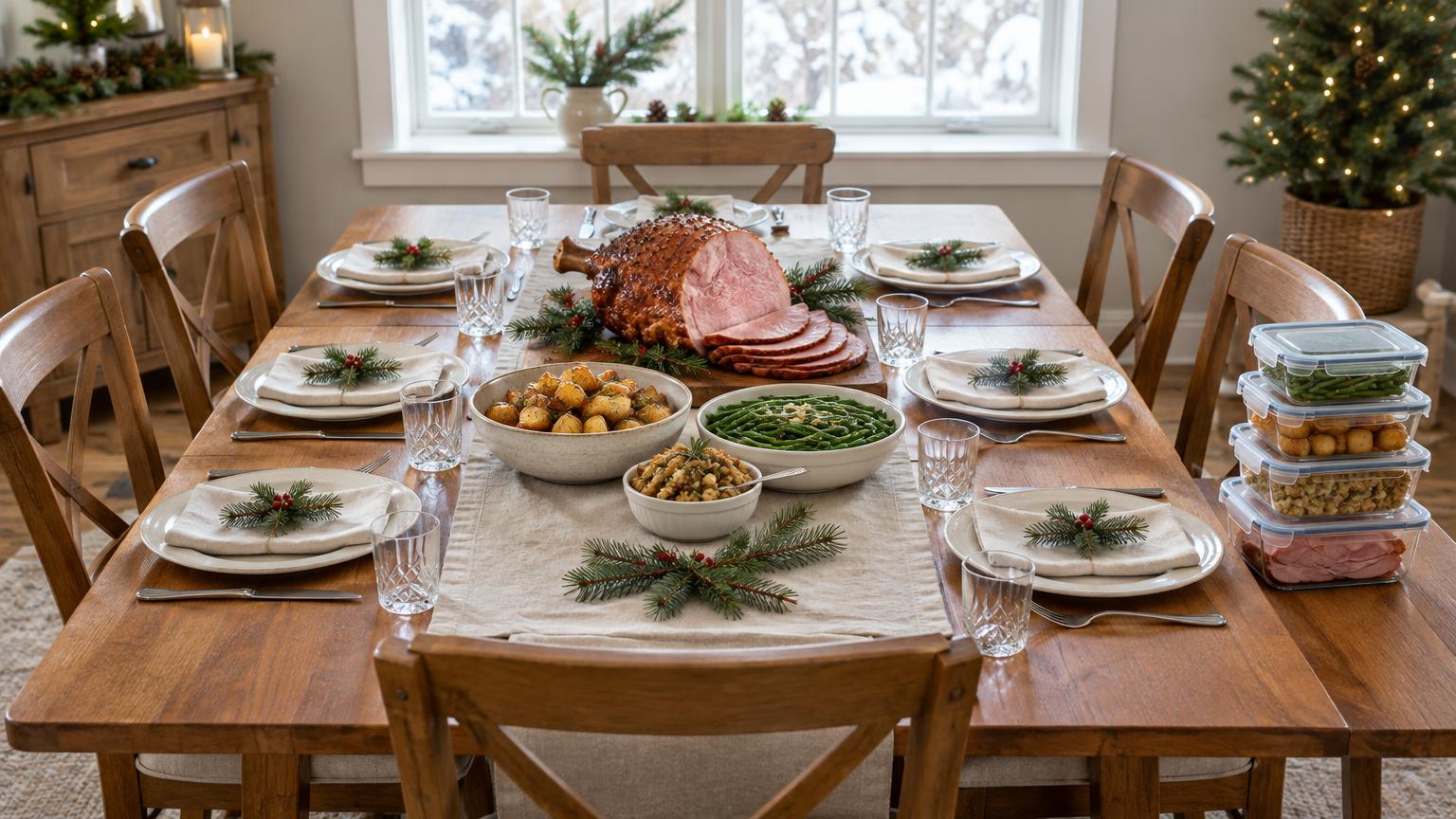
Plan about ⅓ to ½ pound (150 to 225 g) of bone-in ham per guest, or ¼ to ⅓ pound (115 to 150 g) of boneless, which are the USDA's serving amounts. For a bone-in rib roast, plan about 1 pound (450 g) per guest, or one rib for every two people. Then look at the whole holiday, since waste at Christmas usually comes less from one big meal than from two in a row, with cookies between them. Decide on the leftovers before you shop and freeze what you will not eat by December 28.
Buying the main
| Main | Plan per guest | For 8 guests | For 12 guests |
|---|---|---|---|
| Ham, bone-in | ⅓ to ½ lb (150 to 225 g) | 3 to 4 lb (1.4 to 1.8 kg) | 4 to 6 lb (1.8 to 2.7 kg) |
| Ham, boneless | ¼ to ⅓ lb (115 to 150 g) | 2 to 2¾ lb (0.9 to 1.2 kg) | 3 to 4 lb (1.4 to 1.8 kg) |
| Beef rib roast, bone-in | about 1 lb (450 g), or 1 rib per 2 people | 8 lb (3.6 kg), 4 ribs | 12 lb (5.4 kg), 6 ribs |
| Beef rib roast, boneless | about ½ lb (225 g) | 4 lb (1.8 kg) | 6 lb (2.7 kg) |
The ham amounts are from the USDA. The beef amounts are a common butcher's rule rather than an official figure, and they are on the generous side, so they already leave a little for sandwiches.
Ham is the easiest to scale down. Hams are sold in whole and half sizes, and a half is often more than eight people need, so ask for a smaller shank or butt portion if you do not want a week of ham. A whole ham of 10 to 14 pounds (4.5 to 6.4 kg) feeds 20 or more, so it only makes sense for a crowd or if you have definite plans for the rest.
For a small table of four, a 2-rib roast or a small boneless ham usually costs less and wastes less than the smallest whole one you can find. When you have a vegetarian guest, plan their main for the people who will actually eat it plus one spare portion, in case someone else wants to try it.
Once you have chosen, get the timing right so nothing is overcooked and thrown out: I Heart Chef has times by weight for a rib roast.
The Christmas Eve problem
Thanksgiving is one meal. Christmas is often two, and the second one arrives before you have made a dent in the first. If you are cooking on both days, plan them together:
- Let one meal feed the other. Roast a bigger piece of meat on Christmas Eve and turn the rest into sandwiches or a hash for Christmas breakfast or lunch.
- Make one meal small. If Christmas Day is the feast, keep Christmas Eve to soup and bread, or the reverse. Few households finish two full feasts.
- Share sides across both. Roast one big tray of vegetables, and use half on each day.
- Check who is actually there. Guests who come for one meal but not the other are easy to double-count. Write out a head count for each meal, and use it for the shopping list.
Sides, and the two that go to waste
With a large roast or ham on the table, people take less of everything else. These are planning amounts, not rules, so adjust them for your family's appetites:
| Dish | Plan per guest |
|---|---|
| Potatoes, any style | about 5 oz (140 g) raw |
| Green vegetable | about 3 oz (85 g) raw |
| Stuffing or bread side | about ½ cup cooked |
| Rolls | 1 |
| Gravy or sauce | about ¼ cup (60 ml) |
The foods most likely to go uneaten are bread and salad, since people fill up on everything else. Put out half the rolls and keep the rest in the bag, so they stay fresh for tomorrow or go straight in the freezer. Dress salad at the table in small amounts, because a dressed salad will not keep overnight and an undressed one will.
If you served a turkey for Thanksgiving, our Thanksgiving portions guide covers that bird and its usual sides.
Cookies, sweets and the rest of December
December sweets pile up. Plates from neighbors, office leftovers and home baking can all land in the week before Christmas. A few things help:
- Plan 2 or 3 cookies per guest if there is another dessert, instead of baking a full batch of each kind.
- Freeze dough, not cookies. Bake a tray when someone visits and keep the rest in the freezer. Most drop or cut-out cookie doughs freeze well for up to 3 months.
- Freeze extra baked cookies too. Plain cookies hold up well, so you are not racing to finish them.
- Pass it along. A box of extras is a welcome gift for a neighbor, and gets it out of your kitchen while it is still good.
The leftover calendar
The USDA's rule is to refrigerate leftovers within 2 hours and eat most of them within 3 to 4 days. Cooked ham gets a little longer, at 3 to 5 days. Set against the calendar, that looks like this:
| Food cooked on December 25 | Eat or freeze by |
|---|---|
| Sliced beef, sides, gravy | December 28 or 29 |
| Ham | December 30 |
Christmas Eve food runs out a day earlier. That means a New Year's Eve meal cannot use Christmas leftovers from the fridge, but it can use ones from the freezer. Portion and freeze leftovers so you actually eat them by December 28, while they are still at their best, and reheat them to 165°F (74°C) when you eat them.
What to do with what is left
- Ham: sandwiches, omelets, fried rice or pasta. Dice and freeze it in 1-cup (150 g) bags, which keep for 1 to 2 months at their best.
- Ham bone: freeze it for a pot of bean soup in January.
- Rib bones and vegetable trimmings: turn them into stock, then put the spent vegetable scraps in the compost.
- Roast beef: thin slices in sandwiches, or chopped into a hash with leftover potatoes.
- Bread and rolls: freeze for stuffing, crumbs or croutons.
- Guests: offer take-home boxes. Have clean containers ready, because people are much more likely to say yes when the box is already in your hand.
One last check
Before you shop, look through the freezer and pantry to see what you already have. A ten-minute pantry check before the holidays can turn up cranberries, stock and baking supplies you were about to buy again.
