Mend your clothes: easy repairs that cut textile waste
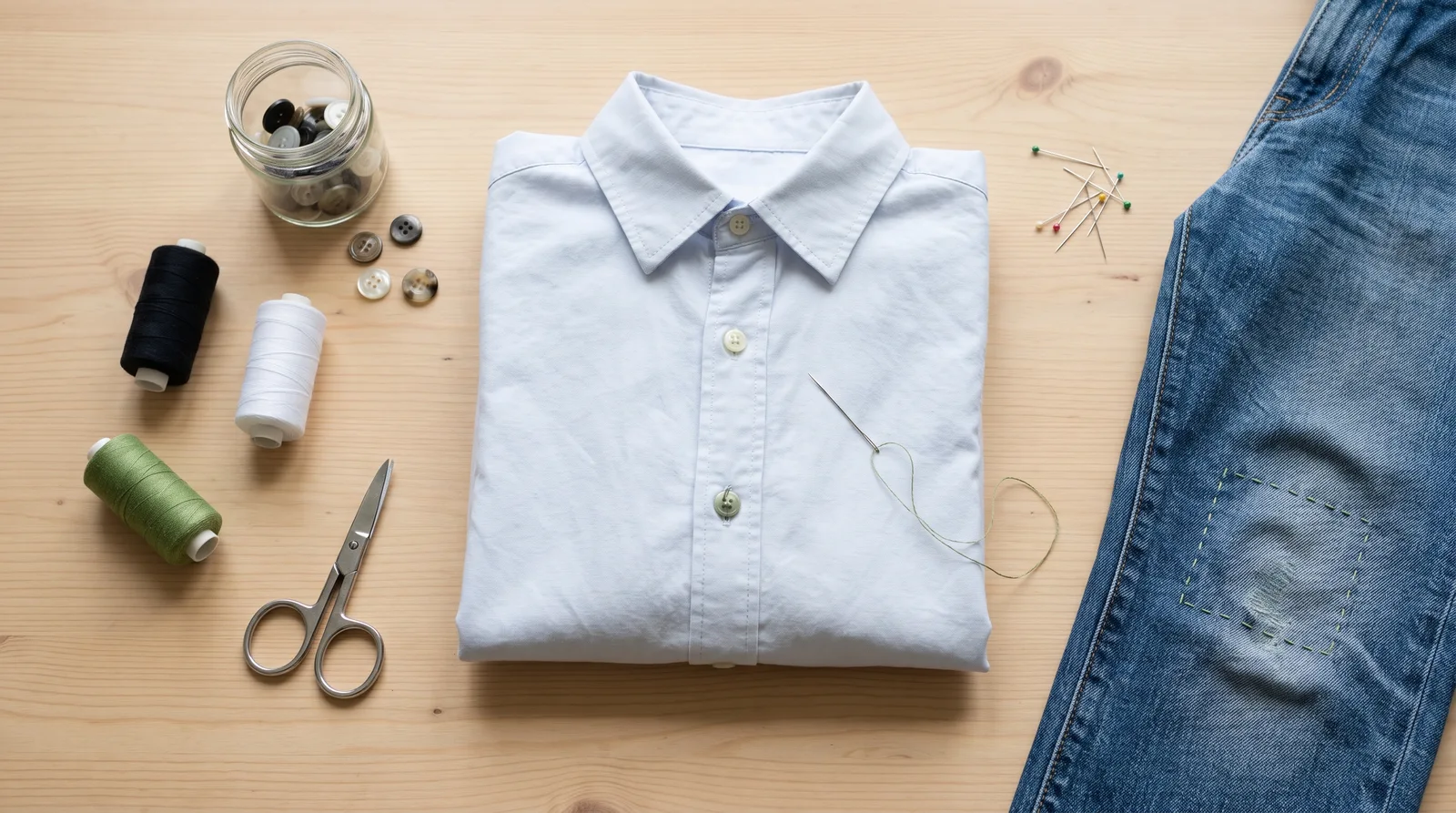
A lost button, a dropped hem or a small hole is the most common reason a good piece of clothing stops being worn, and each of them takes minutes to fix with a needle and thread. Mending what you already own cuts textile waste and saves money, and you do not need a sewing machine or any special skill to start.
What you need
A small kit covers almost every fix: a few hand-sewing needles, thread in black, white and a couple of colours you wear often, small scissors, pins, and a few spare buttons. Many new garments come with a spare button attached inside, so keep those together in a jar.
Sew a button back on
- Thread the needle, pull the thread so the two ends are even, and knot them together. A doubled thread is stronger.
- Find where the old button was. You can usually see the old holes or loose threads.
- Push the needle up from the back of the fabric and through one hole of the button.
- Lay a pin or toothpick across the top of the button and sew over it. This leaves a little slack so the button can sit on top of the buttonhole fabric.
- Go up and down through the holes five or six times. On a four-hole button, sew either two parallel lines or a cross.
- Remove the pin, bring the needle out between the button and the fabric, and wrap the thread around the stitches a few times to make a short stem.
- Push the needle to the back and finish with a few small stitches on top of each other before cutting the thread.
Fix a fallen hem
When the stitching on a trouser or skirt hem comes loose, fold the hem back along its old crease and pin it. Use a single thread in a matching colour and a slip stitch: pick up just one or two threads of the outer fabric, then slide the needle along inside the fold for about a centimetre, and repeat. The stitches stay nearly invisible from the outside. Tie off securely at the end.
Close a small tear or seam split
If a seam has come apart, turn the garment inside out and sew along the original stitching line with small, even backstitches, starting and ending a little way into the intact seam. For a small tear in the fabric itself, sew an iron-on or sew-on patch to the inside, or make the repair a feature with a visible patch or contrasting stitches on the outside.
Darn a hole in a sock or jumper
For small holes in knitwear, a darn rebuilds the fabric. Sew rows of stitches across the hole and a little beyond it in one direction, then weave the thread over and under those rows in the other direction to make a small woven patch. Wool thread or yarn close to the original works best. Do it while the hole is small: it gets harder the bigger it grows.
When to pass it on instead
Some items will not be worn again even after a repair, perhaps because they no longer fit or suit you. If they are in good condition, swap, sell or donate them. Worn-out textiles can often go to a textile recycling bank. Keep them out of household recycling bins unless your area says otherwise; our guide to cut packaging waste with reusable swaps has more ideas for reusing what you already own.
