What to do with a turkey carcass: make stock, then deal with the fat and bones
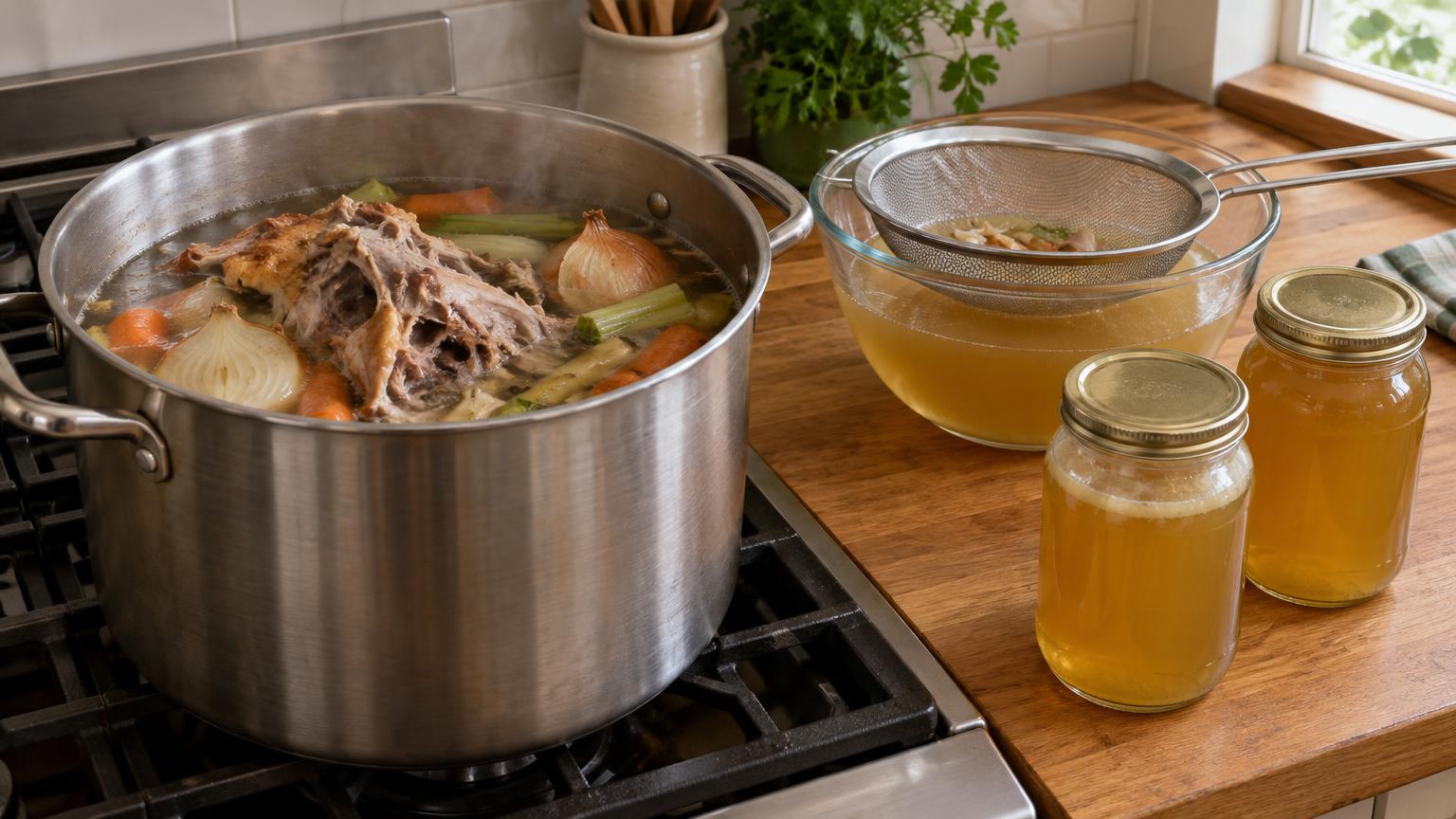
The turkey carcass is the last big piece of Thanksgiving waste, and it is worth a pot of stock before it goes anywhere. Break it up, cover it with water, simmer, strain, and you have soup and gravy base for weeks. What is left after that needs a little care: the fat should never go down the sink, and the bones do not belong in a backyard compost heap.
Save the carcass the same day
Pull off the meat you want to keep first, then break the carcass into a few pieces so it fits your pot and will sit under the water. Keep any pan juices and skin; they add flavour.
Treat the carcass like the rest of your leftovers: get it into the fridge soon after the meal and make the stock within the next few days. If that is not going to happen, bag it and freeze it, and make stock straight from frozen when you have an afternoon at home. For how long each Thanksgiving dish keeps, this guide to how long Thanksgiving leftovers last goes through them one by one.
Make the stock
- Put the broken-up carcass and any juices in your largest pot.
- Add an onion, a carrot and a stick of celery, roughly chopped, or a handful of frozen peelings from your scrap stock bag. Penn State Extension suggests leaving out strongly flavoured vegetables such as broccoli or peppers, and never using mouldy or rotten ones.
- Pour in cold water to cover the bones by one to two inches.
- Bring it to the boil, then turn it down to a gentle simmer. Penn State Extension's method simmers for 30 to 45 minutes; a longer, gentle simmer pulls more flavour from the bones. A hard boil makes it cloudy.
- Season lightly, if at all. Unsalted stock is easier to use later.
- Strain through a sieve into a big bowl and let the solids drain.
A carcass from a typical family-sized turkey fills most home stockpots, so if yours does not fit, make two smaller batches or freeze half for later.
Cool and store it safely
A big pot of hot stock cools slowly, and that slow middle stretch is when bacteria grow. Penn State Extension's advice is to divide it into small containers so it reaches room temperature within two hours, or to set the pot in a sink of ice water and stir often. Then move it to the fridge.
- Fridge: up to three days, according to the same guidance.
- Freezer: use freezer containers or wide-mouth jars and leave space at the top, because the stock expands as it freezes. Freeze it in the sizes you cook with, such as 1 or 2 cups; our guide to freezing leftovers shows how to freeze it flat in bags.
- Thaw it in the fridge or straight in the pan, not on the counter.
- Canning stock at home needs a pressure canner; the Penn State Extension method uses one, with tested times and pressures.
What to do with what is left
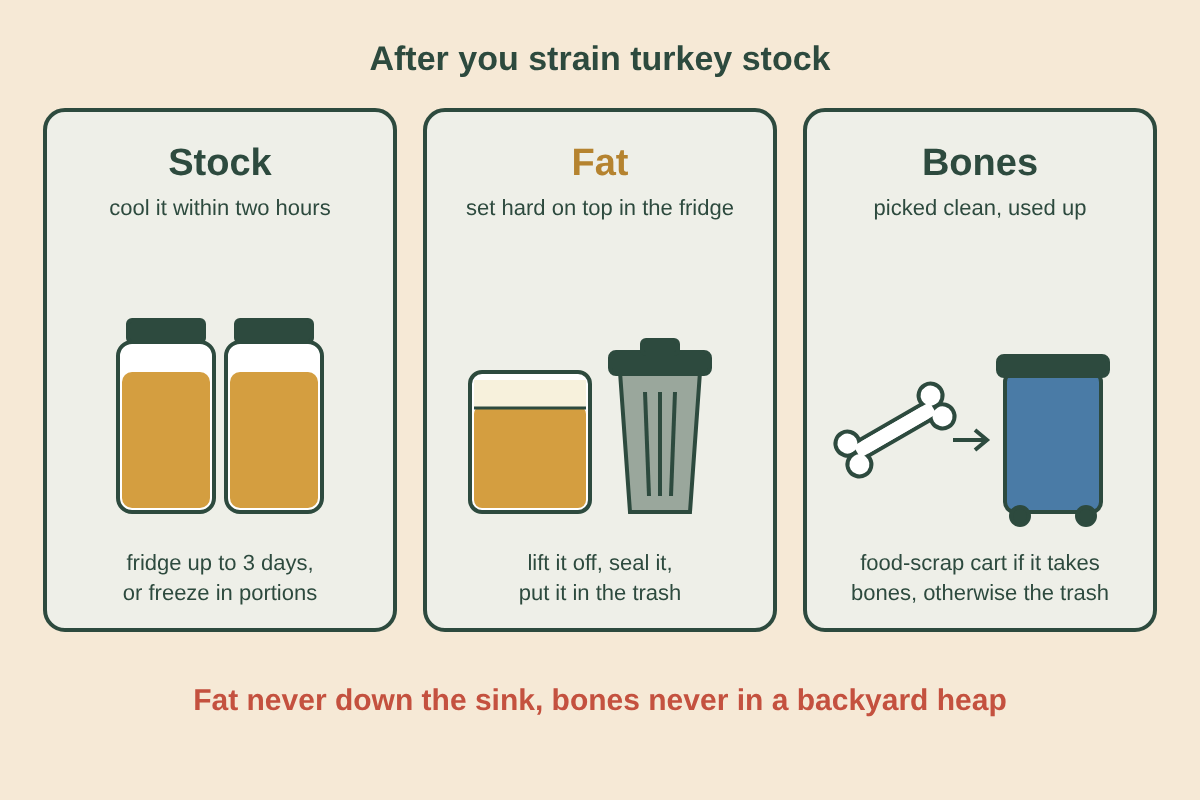
The fat. Once the stock is cold, the fat sets in a firm layer on top. Lift it off with a spoon. Some cooks keep a little for roasting potatoes; the rest goes in a sealed container in the trash. Never pour fat or greasy stock down the sink, where it hardens in the pipes, for the same reasons as used cooking oil.
The bones and cooked vegetables. The U.S. Environmental Protection Agency lists meat, fish and bones among the things to keep out of a backyard compost pile: they attract animals, and home piles usually do not get hot enough to break them down. Some cities' food-scrap collections and commercial composters do accept them, so check your local rules. If yours does not, wrap them and put them in the trash, ideally on collection day so they do not sit and smell.
The meat on the bones. After simmering, any meat still clinging to the carcass falls off easily. Pick it out before you throw the bones away and stir it back into soup.
