Turn vegetable scraps into stock before you compost them
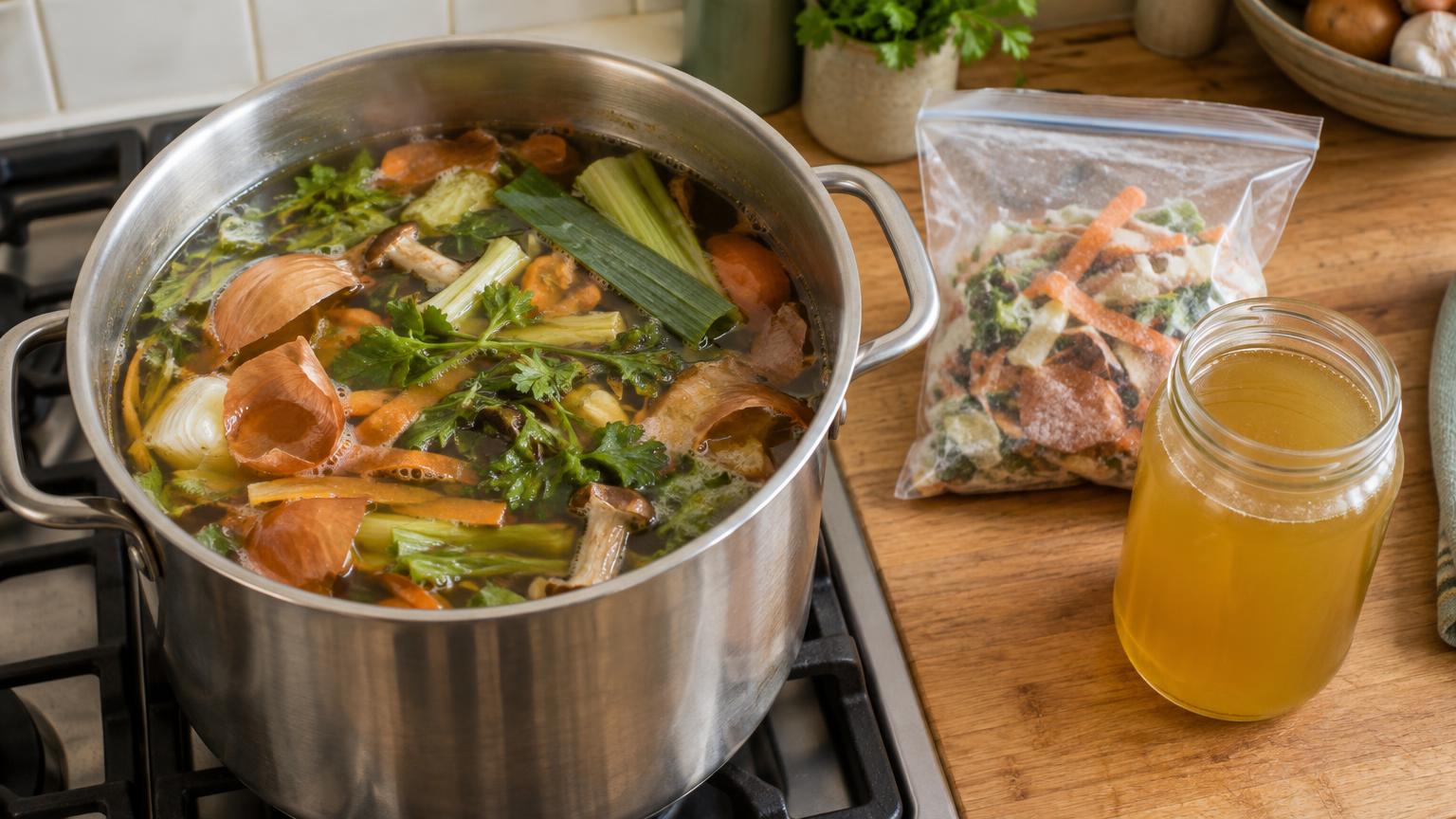
Before your onion skins and carrot peelings go in the compost, they can make a pot of stock. Keep a bag in the freezer, add clean scraps as you cook, and when it is full, simmer them in water for about an hour, strain, and compost what is left. You get free stock for soups, risotto and gravy, and the scraps still end up feeding the garden.
What to save
Most everyday vegetable trimmings work, as long as they are clean and not mouldy:
- Onion, leek and shallot ends and skins (the skins give a deep golden colour)
- Carrot peelings, tops and ends
- Celery leaves and bases
- Mushroom stems
- Parsley, coriander and thyme stalks
- Fennel fronds and the tough outer layers
- Garlic skins and ends
- Tomato cores, in small amounts
Wash vegetables before you peel them, so the peelings are clean enough to cook with.
What to leave out
Some scraps make stock bitter, cloudy or overpowering:
- Cabbage, broccoli, cauliflower and Brussels sprout trimmings, which turn sulphurous when simmered for a long time
- Potato peelings, which make the stock starchy and cloudy
- Beetroot, unless you want pink stock
- Anything slimy, mouldy or past its best
Those can go straight to the compost bin instead.
Keep a scrap bag in the freezer
Use one large zip bag or a lidded box and keep it in the freezer. Each time you prep vegetables, drop the good trimmings in. Freezing stops them going off while the bag fills, which usually takes a week or two for a household that cooks most nights.
When the bag is full (or you need stock), it is time to cook.
Make the stock
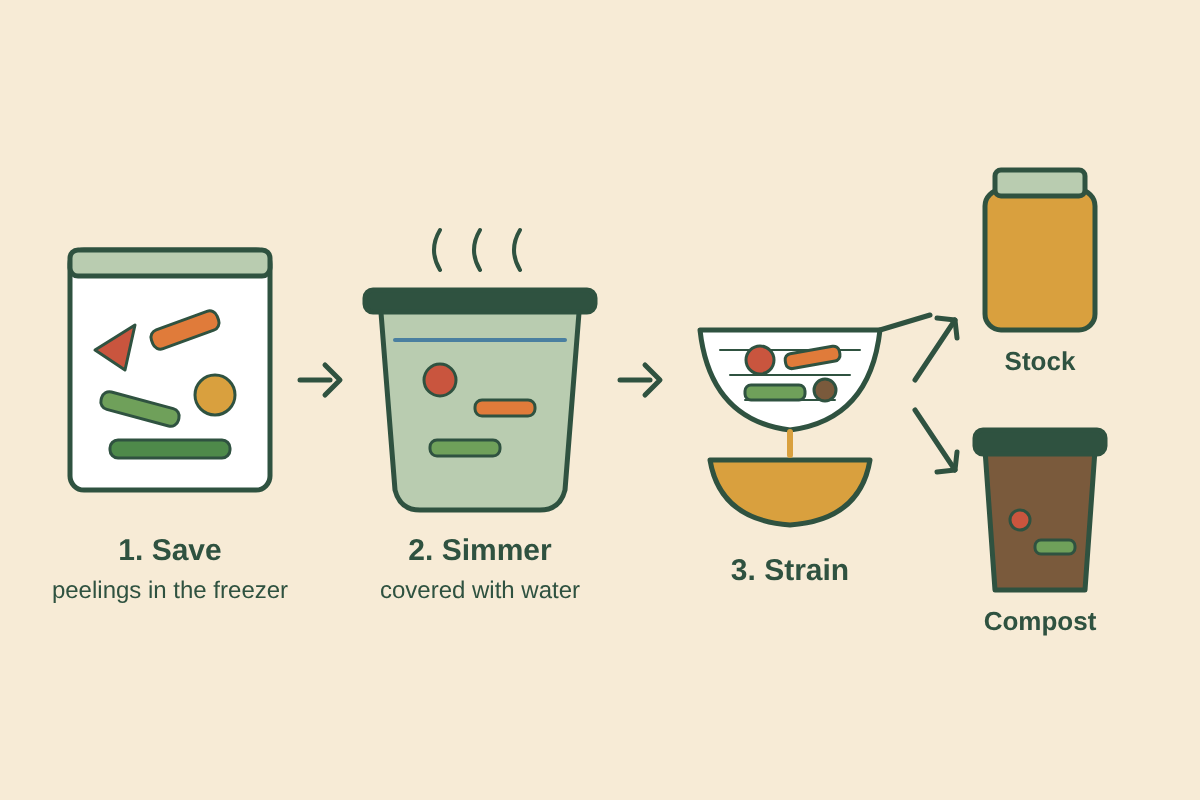
- Tip the frozen scraps into a large pot. There is no need to thaw them.
- Add cold water until the scraps are just covered. Too much water makes thin stock; you can always add more later.
- Add a bay leaf and a few peppercorns if you have them. Leave out salt for now, so you can season whatever you use the stock in.
- Bring it to the boil, then turn it down to a gentle simmer for 45 minutes to an hour. Hard boiling makes it cloudy.
- Strain through a sieve into a bowl and press the scraps gently with a spoon to get the last of the liquid out.
Taste it. If it is weak, simmer the strained liquid for another 15–20 minutes to concentrate it.
Store it
Let the stock cool, then keep it in a jar in the fridge and use it within a few days, or freeze it. Freezing it flat in bags, or in an ice cube tray for small amounts, works well; our guide to freezing leftovers covers how to do that without freezer burn.
Then compost what is left
The cooked scraps have given up most of their flavour, but they are still good compost. Let them cool and add them to your bin or food waste caddy.
If you don't compost at home, check whether your council collects food waste. And if you want to keep fresh vegetables from becoming scraps too soon, see how to store fruit and vegetables so they last longer.
