How to freeze leftovers so you actually eat them later
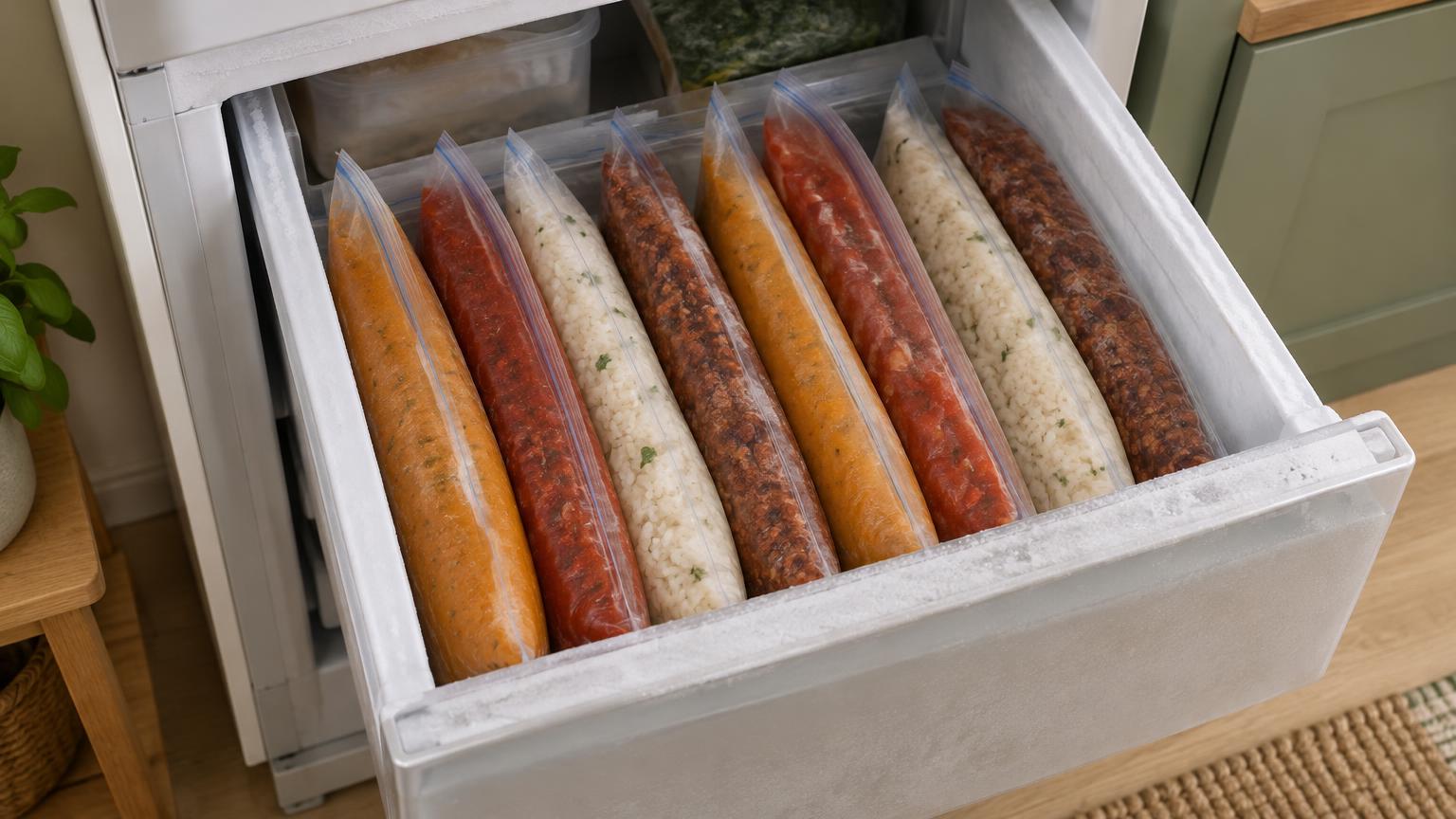
The trick to freezing leftovers that you actually want to eat later is simple: cool them fast, freeze them flat in portions with the air pressed out, and write down what they are. Most freezer waste comes from the opposite habit, a full tub shoved in warm, unlabelled, and found six months later under a layer of frost.
Here is the routine that keeps leftovers out of the bin.
Cool it quickly, then get it in
Food safety guidance from the USDA is to get leftovers into the fridge or freezer within two hours of cooking. A big pot of soup holds its heat for a long time, so split it into shallow containers or bags and it will cool much faster than it would in one deep pan.
You do not need to wait until it is cold before freezing. Lukewarm is fine. Piping hot is the one to avoid, because it warms the food already sitting around it.
Portion it the way you will eat it
Freeze in the amounts you actually reach for: one lunch, a dinner for two, a cup of sauce. A two-litre block of chilli means defrosting all of it for one bowl, and that is how frozen food ends up wasted after all.
Good candidates:
- Soups, stews, curries and chilli
- Pasta sauces and gravies
- Cooked rice, grains and beans (spread them out so they freeze loose)
- Cooked meat in its sauce
- Bread, sliced first so you can take out one piece at a time
Dishes with a lot of raw salad, boiled potatoes in chunks or creamy sauces made with single cream tend to change texture, so eat those fresh.
Freeze it flat, with the air out
For anything saucy, a zip bag beats a tub. Fill it, lay it on the counter, and press the air out towards the opening before you seal it. Then freeze it lying flat on a tray. Once it is solid you can stand the bags up in a drawer like files, and you can see every one of them at a glance.
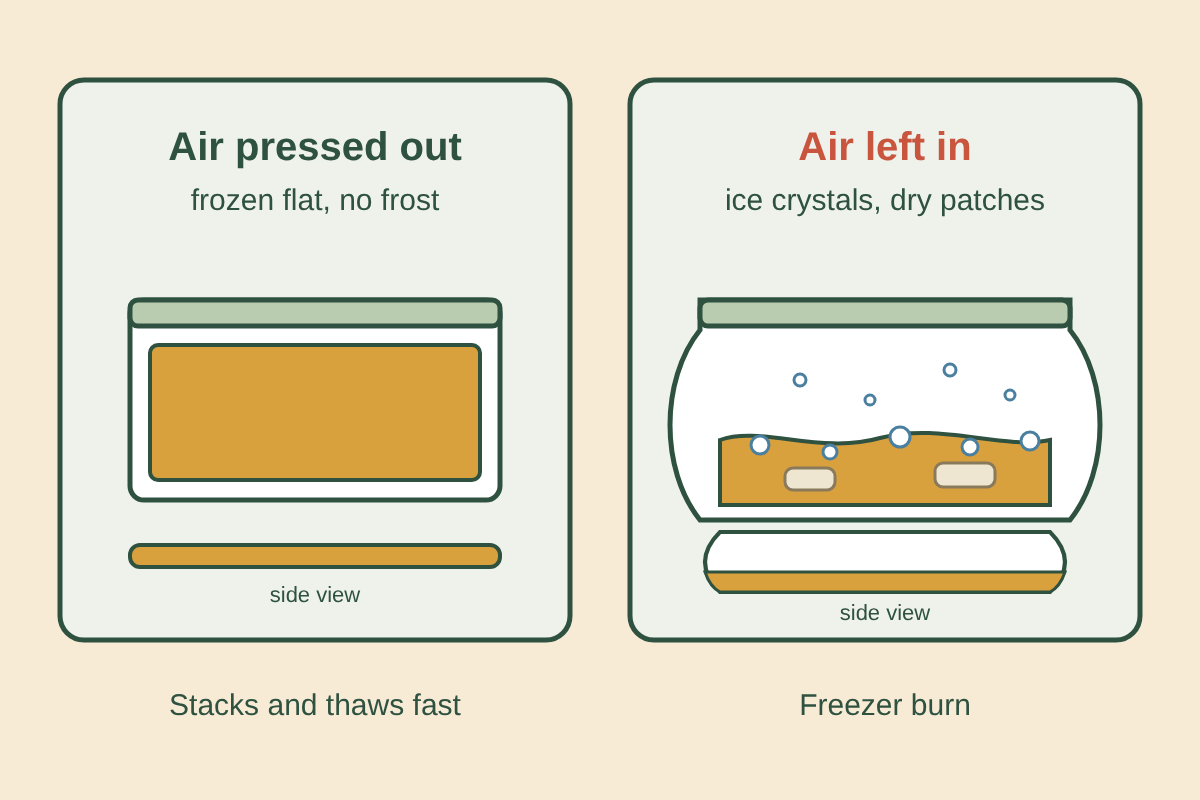
Air in the bag is what dries out the surface of frozen food. Those pale, leathery patches and the ice crystals inside the bag are freezer burn. According to the USDA it does not make food unsafe, but it does make it taste of nothing, and that is usually when people give up and throw it away. A thin, flat bag also thaws in a few hours in the fridge, instead of overnight.
If you prefer rigid containers, fill them close to the top (leave a finger's width for liquids to expand) so there is little air left inside.
Label everything
Write what it is and the date on every bag or lid. "Brown sauce, October" tells you far more than a mystery block does in February. A strip of masking tape and a marker is enough.
Keep a short list on the freezer door or in your phone of what is in there. It takes ten seconds when you put something in, and it is the habit that stops things getting lost at the bottom.
Use the oldest first
A freezer at -18°C (0°F) keeps food safe for as long as it stays frozen, but quality fades over months. Most cooked leftovers taste best within two or three months, so aim to rotate through them rather than stockpile.
Put new bags at the back or bottom and move the older ones forward, the same way you would sort your fridge. Our guide to storing fruit and vegetables so they last longer uses the same "oldest where you can see it" idea for fresh food.
Thaw and reheat safely
Thaw leftovers in the fridge overnight, or reheat soups and sauces straight from frozen in a pan with a splash of water. Microwave defrosting works too, as long as you cook the food straight away afterwards.
Reheat until the food is steaming hot all the way through, and only reheat it once. That is one more reason to freeze small portions.
When freezing is not the answer
If you find yourself freezing the same thing week after week, the fix is upstream: cook a little less. The five easy ways to waste less food at home cover planning and portion sizes. And whatever does go past its best can still go into a home compost bin instead of the rubbish.
