How to reuse or get rid of used cooking oil (never down the drain)
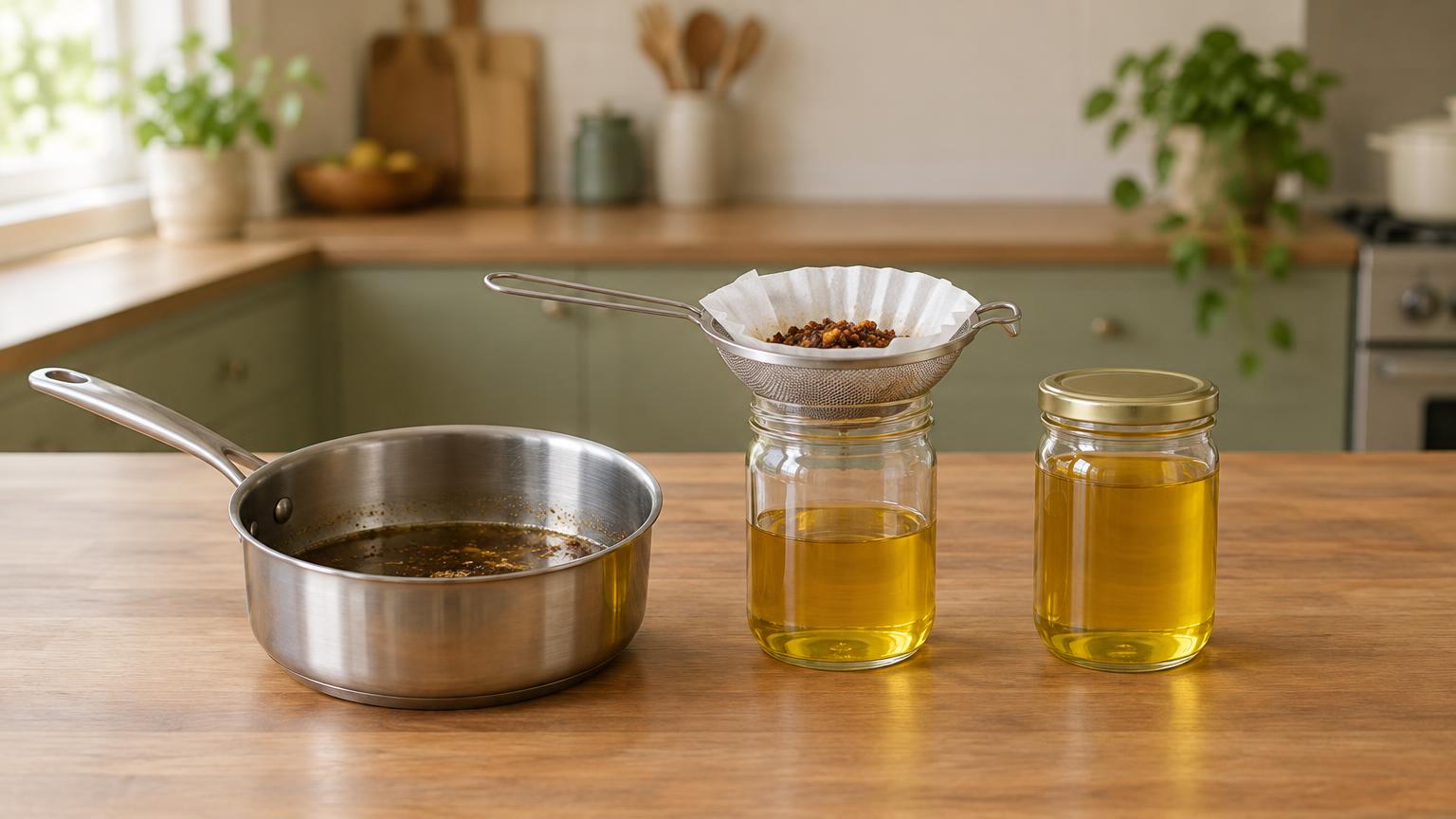
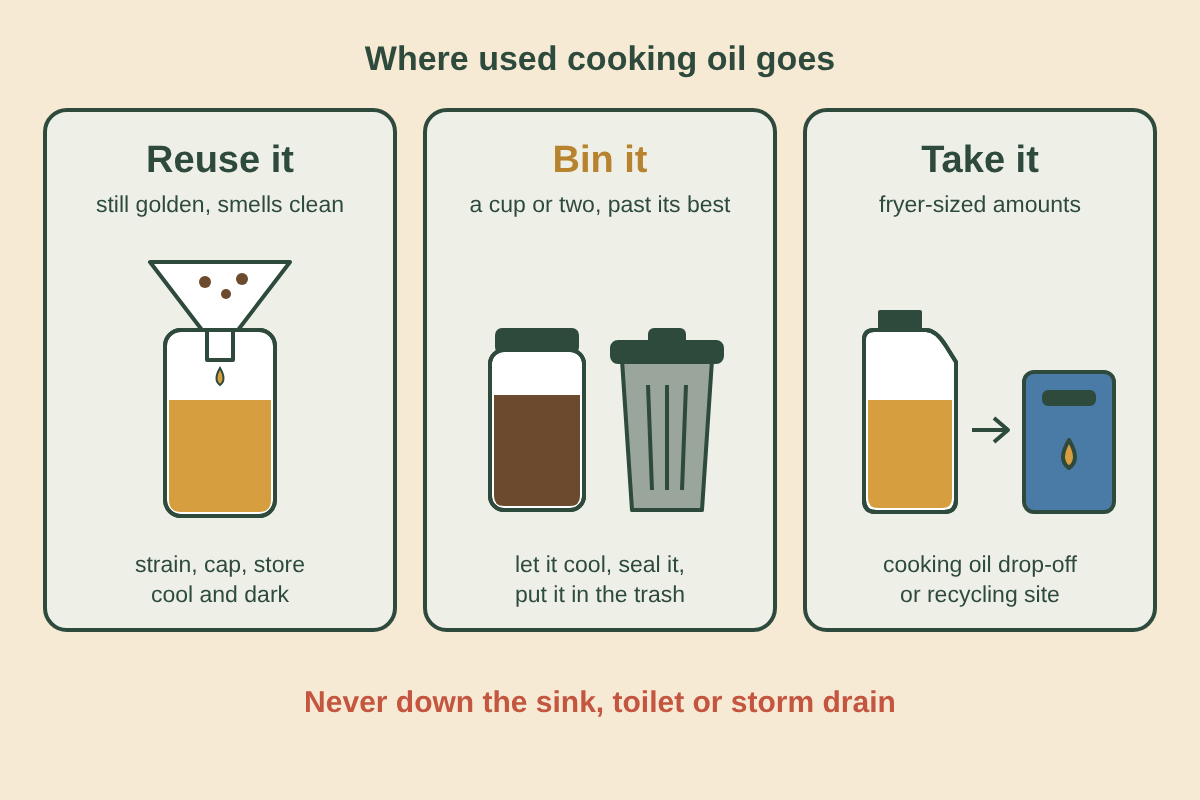
If used cooking oil still looks fairly light and smells clean, strain it and fry with it again. If it is past its best and you only have a cup or two, let it cool, seal it in a container and put it in the trash. If you have a lot of it, like the several gallons left in a turkey fryer, take it to a cooking oil drop-off. The one place it should never go is down the sink, the toilet or a storm drain.
Why the drain is the wrong place
Oil runs out of the pan as a liquid, but it does not stay one. As it cools in the pipes it thickens and sticks to the walls, then catches food scraps, wipes and anything else passing by. Over time that builds into a clog in your own plumbing, or further down the line in the sewer, where the huge lumps of hardened fat and rubbish are known as fatbergs.
Hot water and a squirt of dish soap do not solve it. They carry the grease a little further before it sets somewhere you cannot reach.
The same goes for the film of fat left in a roasting tin or frying pan. Wipe it out with a paper towel and put the towel in the trash before you wash up.
How to tell if the oil can be used again
Frying oil breaks down a little every time it is heated, and bits of food speed that up. Look at it and smell it before you decide:
- Still good: fairly clear, not much darker than when it was new, a neutral smell.
- Done: much darker or cloudy, thick or sticky, foams up when heated, starts smoking at a temperature it used to handle, or smells sharp, fishy or stale.
What you fried makes a difference. Oil from plain fries or potatoes usually stays clean longest. Battered and breaded food leaves more crumbs behind, so that oil wears out sooner. Oil that cooked fish takes on its flavour, so keep it for frying fish again.
How to strain and store oil for next time
- Let it cool completely. A big pot of oil stays dangerously hot for much longer than you would expect. Leave a turkey fryer's worth with the burner off and the lid on, out of reach of children and pets, until it is cool all the way through. That can mean overnight.
- Strain it. Set a fine sieve lined with a paper coffee filter or a piece of cheesecloth over a clean, dry jar, or use a funnel into the oil's original bottle. Pour slowly. The crumbs stay in the filter.
- Seal it and keep it cool and dark. Heat and light make oil go rancid faster, so a cupboard away from the stove is better than the counter beside it.
- Write on the lid. Note what you fried and when, so the fish oil does not end up in the doughnuts.
Fat from bacon or a roast is worth saving too. Pour it through a sieve into a small jar, keep it in the fridge, and use a spoonful to fry eggs or roast potatoes.
Getting rid of a small amount
When the oil is done and there is not much of it:
- Let it cool, then seal it. Pour it into something with a lid, such as the empty oil bottle, a jar or a carton, close it and put it in the trash. Some local services ask you to soak it up first with paper towels, sawdust or cat litter, so check your city's waste page.
- Let solid fats harden. Bacon grease and dripping set as they cool. Scrape them into the trash once they are firm.
- Keep it out of the recycling. A bottle with oil in it is trash, not recycling. Only empty, drained containers belong in the recycling bin, as our guide on preparing recycling so it actually gets recycled explains.
- Keep it out of the compost heap. Pouring oil onto a home compost bin coats everything, slows it down and draws in pests. It is the same reason a simple bin is best kept free of oily cooked food, as covered in our beginner's guide to composting at home.
Large amounts: turkey fryers and deep fryers
A turkey fryer or a full deep fryer holds far too much oil to soak up and bin. This is what cooking oil drop-offs are for. Many cities, counties and waste services collect used cooking oil from households, some all year at a recycling centre and some only in the weeks after Thanksgiving and Christmas, when they know a lot of fryers come out. Collected oil is usually processed into biodiesel or other products instead of being landfilled.
To find one, search your city or county waste website for "used cooking oil drop-off" or "cooking oil recycling", or call your local recycling centre. Then:
- Let the oil cool and strain out the crumbs.
- Carry it in its original container or another sealed jug.
- Keep it to cooking oil only: no water, and nothing like motor oil mixed in.
Grease bins behind restaurants belong to the restaurant and its collector, so do not add to them without asking.
If the turkey fryer oil still passes the look-and-smell check, you do not have to give it up at all. Strain it, store it sealed in a cool place, and it can fry the next turkey or a batch of fries.
Use less oil in the first place
The least oil to deal with is the oil you never pour in. A smaller, deeper pan needs less oil for the same depth than a wide one. Shallow frying works for many things people deep-fry, and the oven does a fine job with potatoes. If you are planning the whole holiday meal, the same thinking applies to the food: our guide to how much to cook per guest at Thanksgiving helps you buy for the people actually coming.
