Use the whole pumpkin: seeds, puree and what to compost
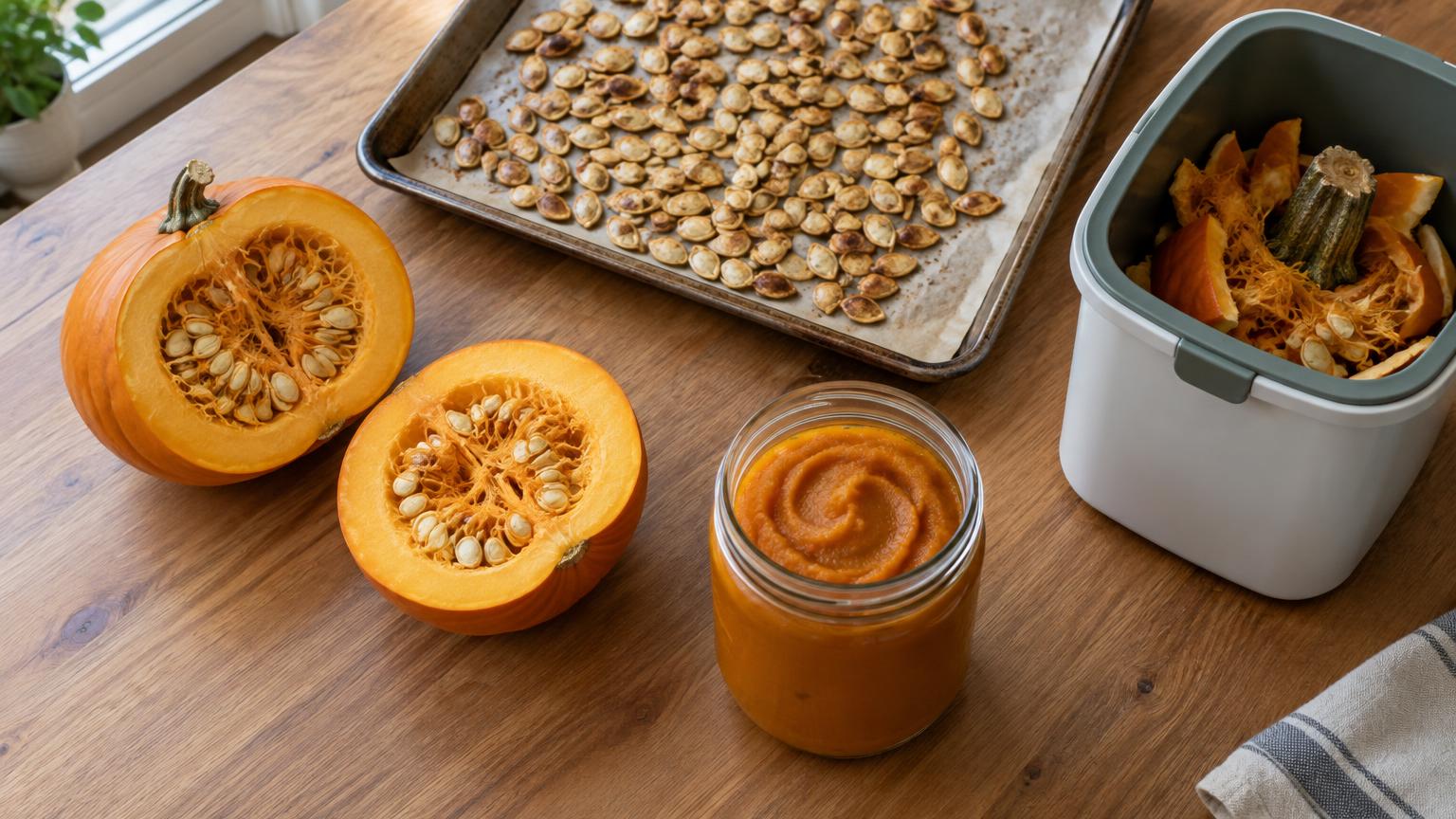
A cooking pumpkin can be used almost entirely. The flesh becomes puree for pies, muffins and soup, the seeds roast into a crunchy snack, and the stringy pulp can go into stock. Only the stem and skin need to go to compost. A carved jack-o'-lantern is different: after days on the doorstep it is not safe to eat, but it composts well once every scrap of candle wax and decoration is off.
Pick the right pumpkin for eating
Small pumpkins sold as "sugar" or "pie" pumpkins, usually 2 to 4 lb (1 to 2 kg), have thick, sweet, fairly dry flesh. Big carving pumpkins are grown for size and a thin wall that is easy to cut, so their flesh is watery and stringy. You can cook a fresh, uncarved carving pumpkin, but the puree will need draining and tastes milder.
Step 1: Scoop out the seeds and pulp
Cut the pumpkin in half from stem to base. Scoop the seeds and stringy pulp into a bowl with a sturdy metal spoon. Pull the seeds out of the strings with your fingers; it is quicker in a bowl of water, because the seeds float and the pulp sinks.
Keep the pulp. Add it to a bag of frozen vegetable scraps for your next pot of scrap stock, where it adds a mild, sweet flavour.
Step 2: Roast the seeds
- Rinse the seeds and pat them as dry as you can with a clean towel. Wet seeds steam instead of crisping.
- Toss with a little oil and salt, about 1 teaspoon (5 ml) of oil per cup of seeds.
- Spread them in a single layer on a baking sheet and roast at 325°F (165°C) for about 20 to 30 minutes, stirring every 10 minutes, until golden and crunchy. Small seeds cook faster, so start checking early.
- Cool completely and store in an airtight jar.
Squash seeds from butternut or acorn squash roast the same way, in a little less time.
Step 3: Make puree from the flesh
- Heat the oven to 400°F (200°C).
- Put the pumpkin halves cut side down on a lined baking sheet. Roast for 45 to 60 minutes, until a fork slides through the skin and flesh easily.
- Let them cool until you can handle them, then scoop the flesh away from the skin.
- Blend or mash until smooth. If the puree looks wet, let it drain in a sieve lined with a coffee filter or clean cloth for an hour or two. Thick puree works in recipes written for canned pumpkin.
Store the puree safely
- Fridge: in a covered container for 3 to 4 days, like other cooked vegetables.
- Freezer: freezing is the easiest way to keep it. Portion it into 1 cup or 2 cup amounts, the sizes your recipes use, in freezer bags laid flat or in containers with a little headspace. Label with the date.
- Do not can it at home. The National Center for Home Food Preservation does not recommend home canning any mashed or pureed pumpkin or pumpkin butter, because there is no tested method showing that heat reaches the centre of a jar of thick puree well enough to destroy the bacteria that cause botulism. Only cubed pumpkin can be canned, and only in a pressure canner.
What goes in the compost
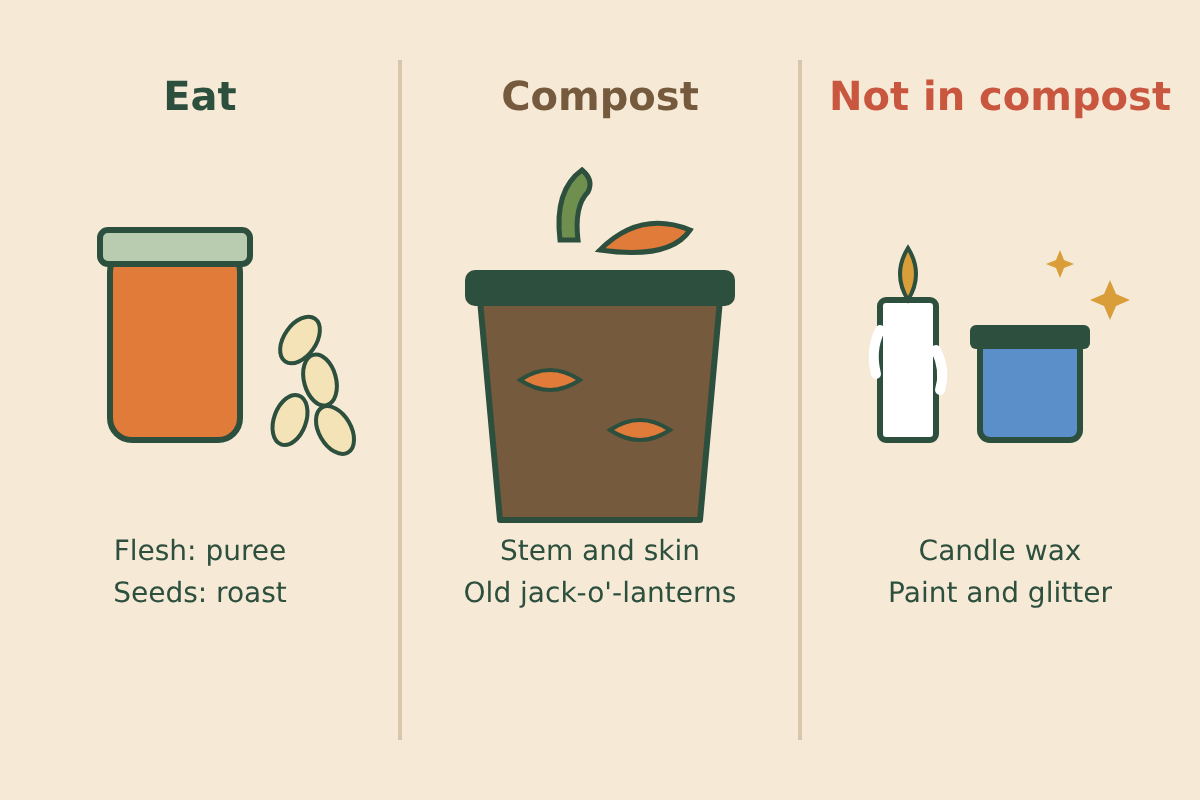
- Stem and skin: straight into the compost. Chop them into smaller pieces and they break down much faster.
- A carved jack-o'-lantern: do not eat it. It has been cut open and sitting at outdoor temperatures for days. Compost it instead.
- Before composting a jack-o'-lantern, remove candles, wax drips, paint, glitter, glue, stickers and anything else that is not pumpkin. A painted, waxed or varnished pumpkin should go in the rubbish, not the compost.
- Take out the seeds from a pumpkin bound for compost, or you may find pumpkin vines growing in your heap next summer.
- Break it up. Smash or cut a whole pumpkin into pieces, and mix it with dry brown material such as leaves or shredded cardboard so the heap does not turn slimy.
If you are new to composting, our beginner's guide to composting at home covers setting up a bin and balancing wet and dry material. If you do not compost, check whether your area runs a pumpkin collection or food-scrap drop-off after Halloween.
Ideas for a lot of puree
- Pumpkin pie, muffins or pancakes
- Stirred into oatmeal or yogurt
- A simple soup with onion, stock and a little cream
- Added to pasta sauce or mac and cheese
Treat it like any other food you are trying not to waste: freeze it in recipe-sized portions as soon as you make it, and put the freezer bags where you will see them. Our guide to storing fruit and vegetables so they last longer covers the rest of the season's produce.
